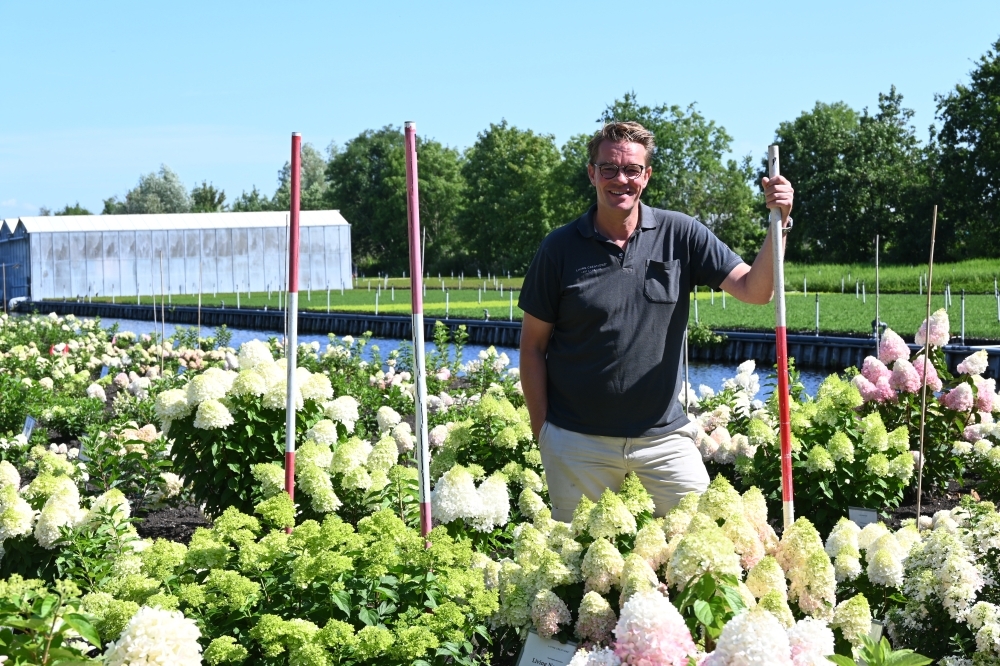
Success is no coincidence. Not even in tree nurseries.
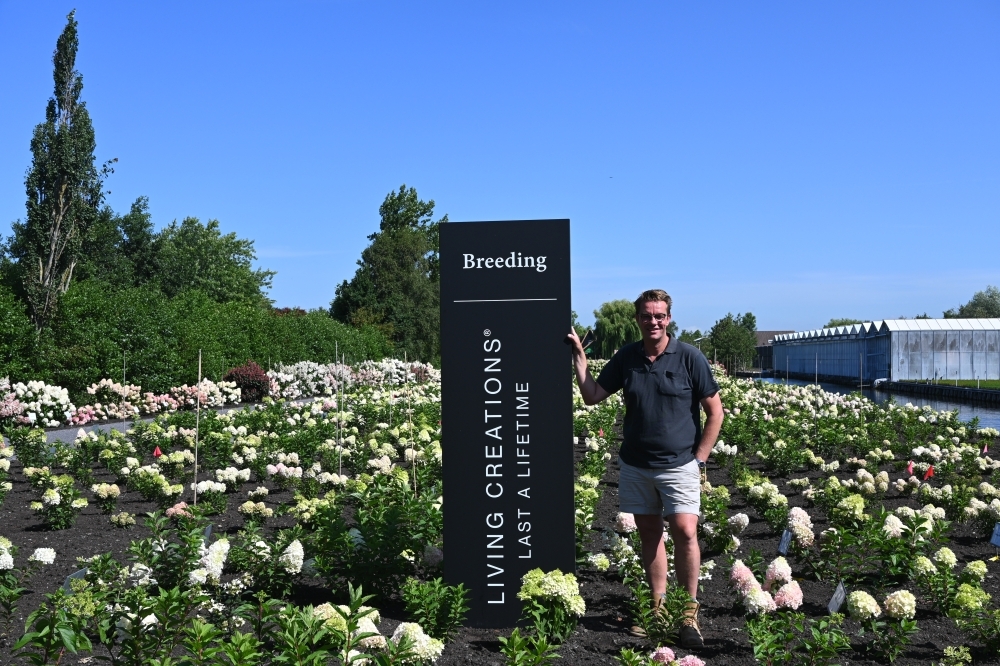
For years, tree nursery cultivation revolved around one central question: how do we develop better plants? Stronger genetics, richer flowering, improved disease resistance and more ornamental value. Every new cultivar had to outperform the previous one. That pursuit still forms the foundation of Living Creations. Even after fifteen years, Alex Schoemaker considers himself first and foremost a breeder.
Yet something fundamental has changed over those fifteen years. Not so much when it comes to plants themselves, but more in the world around it.
“I often say: the plant doesn't change, the world around us does.”
It is a statement that says a great deal about Schoemaker's development as an entrepreneur. Where he once focused primarily on genetics and plant characteristics, he now pays just as much attention to everything that happens afterwards. To growers who are becoming increasingly more specialised, retailers looking to differentiate themselves, consumers with changing expectations and a market that is evolving faster than ever.
During the conversation, it is striking how naturally he moves between these different worlds. A question about a new hydrangea quickly leads to discussions about consumer behaviour, market positioning or cooperation within the supply chain. For Schoemaker, these worlds have become inseparable.
That shift did not result from one major decision. It developed gradually, introduction after introduction. Schoemaker saw cultivars that represented years of breeding work but achieved little commercial success. At the same time, there were varieties that perhaps seemed less spectacular but matched exactly what the market was looking for at that moment. As a result, he increasingly found himself asking the same question: what makes a plant truly successful?
His answer is both simple and telling.
“A good plant is not yet a successful product.”
Breeding remains the foundation. Schoemaker has no doubt about that. Even today, a large part of his work still revolves around genetics, selection and improving existing varieties. New characteristics such as heat tolerance, longer ornamental value and reliable performance under different climatic conditions continue to receive constant attention. The collection is always changing.
But it no longer ends there.
According to Schoemaker, an equally important process begins afterwards. A new cultivar has to find its way to the market. Not every grower is the right match for every variety. One specialises in supplying garden centres, another focuses on supermarkets or larger pot sizes. Export markets also differ considerably. That is why every introduction requires its own approach.
This philosophy ultimately also formed the basis for the collaboration with Plantipp. Not as an objective in itself, but as a logical extension of the breeding process. According to Schoemaker, breeding and marketing are no longer separate worlds. Those who simply wait to see how the market responds after introducing a new cultivar leave an important part of success to chance. By bringing growers, traders and retailers together at an early stage, the likelihood of a cultivar becoming commercially successful increases considerably.
Living Creations deliberately looks beyond the invoice.
“We operate B2B, but we think B2C.”
Living Creations will rarely meet the end consumer. Yet, according to Schoemaker, the consumer is the ultimate benchmark. Does the plant remain attractive for many years? Does it deliver what the label promises? Would someone buy it again or recommend it to others? Ultimately, that is where a cultivar's future is decided.
With that in mind, Living Creations invests not only in genetics but also in everything that makes a plant understandable and attractive. Photography, labels, care information, videos and demonstration gardens are not marketing tools designed simply to sell more plants, but resources that strengthen every link in the supply chain.
“We are only successful when the company receiving our invoice is successful as well.”
However, Schoemaker is unwilling to answer the question of which cultivar has made Living Creations successful. To him, that would feel like choosing between his children. Moreover, he does not believe that one single plant makes the difference.
“It is not one variety that makes us successful. It is the collection.”
It perfectly illustrates how Schoemaker now views his profession. It is not one introduction, one innovation or one link in the chain that determines success. Rather, it is the combination of breeding, market knowledge and cooperation that enables a plant to succeed beyond the breeding process.
At the end of the conversation, he summarises that development in a single image.
“Breeding is the foundation. Collaboration is the house.”
Perhaps that is the greatest change Living Creations has undergone in the past fifteen years. Alex Schoemaker has not only developed better plants; above all, he has developed a broader vision of what ultimately makes a plant successful. A good cultivar is created in the greenhouse. A successful cultivar only comes into being when the entire supply chain works together.