'The industry focuses too much on what happens above ground'
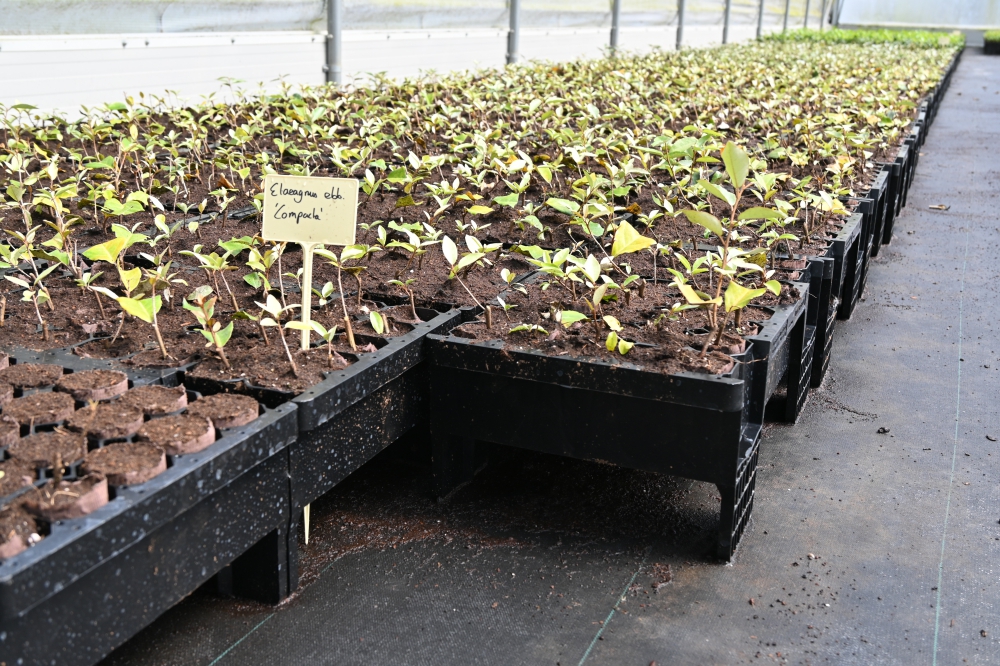
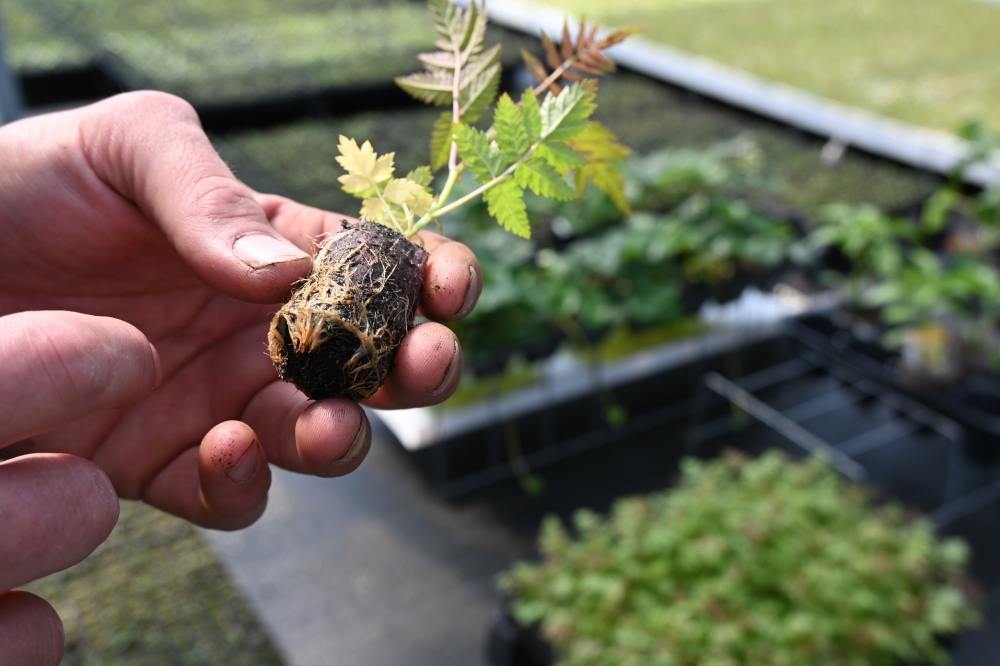
When walking through a tree nursery, people often automatically look at what is visible above ground: height growth, branching, uniformity and colour. According to Rob Tolenaars of TTS, however, this certainly doesn't say everything about the quality of a plant. “The real foundation is below ground,” he states. “That is ultimately where it is determined how strongly a plant develops.”
With TTS, Tolenaars develops tray systems for the cultivation of young plants. The focus is explicitly on root development and uniformity. According to him, the market is changing rapidly. Labour is becoming more expensive, plant losses cost more money and growers want more predictability in their cultivation. As a result, attention for the quality of starting material is also increasing.
From volume to quality
Tolenaars sees that for years the industry strongly focused on speed and above-ground growth. He understands that as well: a plant that quickly develops volume looks commercially attractive. Nevertheless, according to him, there is a growing awareness that a good root system is ultimately decisive for performance later in the chain.
“We prefer a compact plant with a full root structure over a large plant with a mediocre root system.”
According to Tolenaars, that difference becomes especially visible after potting or planting out. Plants with an active and evenly developed root system establish themselves faster, continue growing more consistently and result in less plant loss. Especially in a market where labour and space are expensive, uniformity is becoming increasingly important.
Air pruning and root steering
An important part of the TTS tray systems is air pruning. In this process, roots are naturally guided because root tips dry out as soon as they come into contact with air. This creates more branching within the plug and prevents root circulation.
According to Tolenaars, this is not only about technology, but mainly about understanding plant behaviour.
“The tray largely determines how a root develops. That is still too often underestimated.”
According to him, tray development therefore goes beyond production efficiency alone. Water distribution, substrate volume, drainage and mechanical processability all play a role. Especially now that more nurseries are automating, consistent plugs are becoming increasingly important.
Mechanisation requires uniformity
Further mechanisation within the tree nursery industry also affects the requirements for young plant material, according to Tolenaars. Machines can only work efficiently when plants and plugs are sufficiently uniform. That requires a different way of looking at trays and rooting.
“In the past, a lot could still be corrected manually. In an automated line, that is no longer possible. Then every plug simply has to be right.”
According to Tolenaars, this also creates more interest in the complete chain behind young plant material. Growers are no longer only looking at the price of a tray, but increasingly at the total effect on labour, plant loss and cultivation speed.
Developing with a practical focus
According to Tolenaars, what distinguishes TTS is that new tray concepts are always developed together with growers. Not from theory, but from practical challenges within the business.
“You can come up with something nice in an office, but ultimately it simply has to work outdoors and in the greenhouse.”
Sustainability and efficient use of raw materials are also playing an increasingly important role. According to Tolenaars, the market expects solutions that are both technically and economically sustainable.
In the coming years, he expects pressure on efficiency to increase further. Precisely for that reason, he expects root quality and uniform cultivation to play an increasingly important role within modern tree nurseries.
“The industry is becoming more professional and more precise. Then you can no longer treat the foundation of the plant as a side issue.”