Soil resilience: where do we stand now?
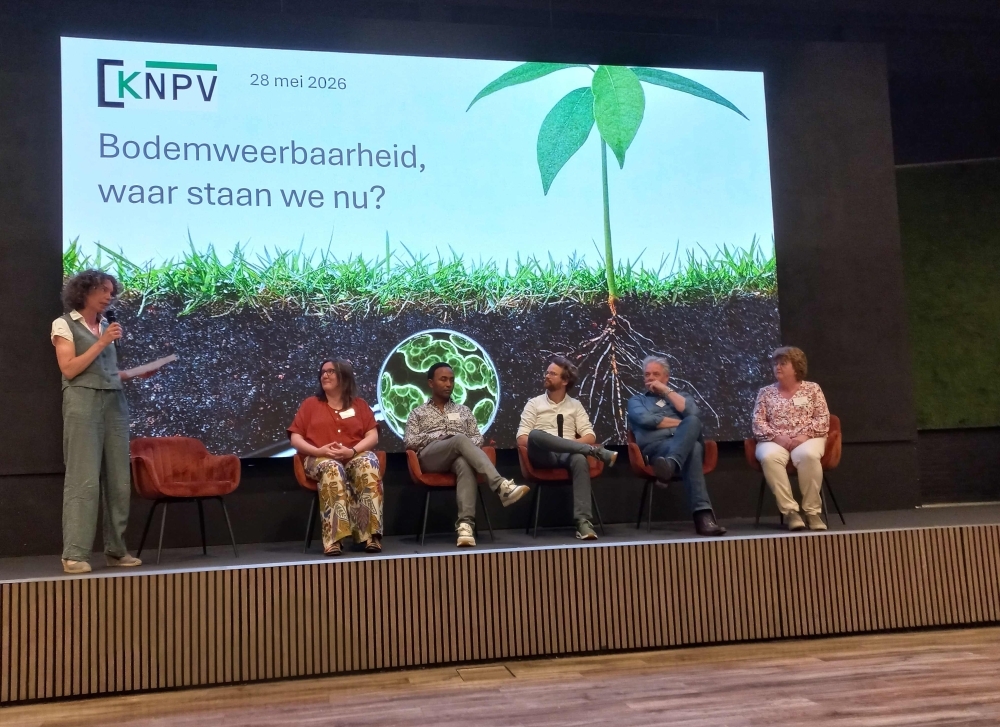
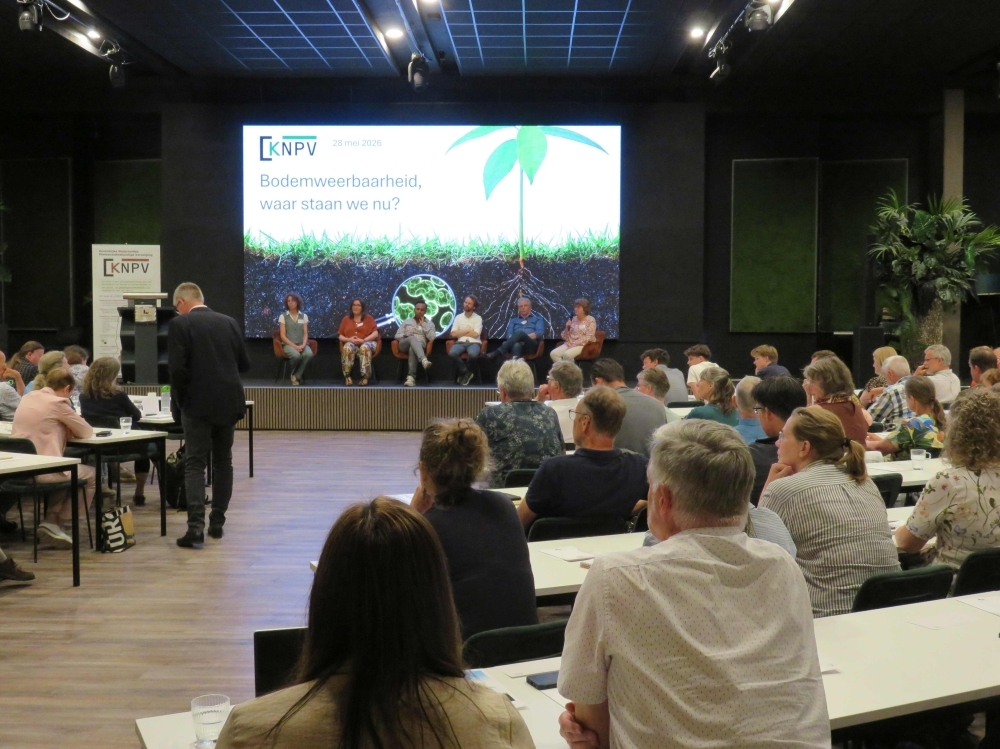
On 28 May 2026, the Royal Dutch Phytopathological Society (KNPV) held a well-attended meeting on the theme of soil resilience. Over 150 professionals and students in the field of plant health took part. Soil resilience plays a major role in plant health. The soil and soil life of a particular plot largely determine whether a plant growing there is more likely to fall ill or, conversely, is more resilient to certain pathogens. A system comparable to the functioning of the gut microbiome in humans.
Five speakers from the fields of fundamental research, applied research, consultancy and supply provided various examples and addressed questions such as: How and what determines whether a plot has good disease resistance? What can we learn about soil resilience from greenhouse horticulture (whether or not on substrate)? Can you claim that a product improves soil resilience and plant health? And what levers can a grower pull to increase soil resilience on their plots?
Microbiome in the soil
By the end of the afternoon, it was concluded that more and more knowledge is becoming available from scientific and practical research, and that we are gaining a better understanding of the systems behind soil resilience. Desalegn Etalo (Assistant Professor of Phytopathology, Wageningen University & Research) predicts that we will gain an ever-better understanding of how plants attract, maintain and pass on protective microbiome communities to future generations. And that we will be able to apply this knowledge in an increasingly targeted manner in the future.
Postdoctoral researcher in Soil Sciences (WUR) Robbert van Himbeeck argued that we should focus less on the presence of individual antagonists in the soil and more on identifying conditions that stimulate their establishment and activity.
In greenhouse horticulture too, soil and substrate resilience are key components of a resilient cropping system. According to Marta Streminska (researcher in microbial ecology, Greenhouse Horticulture Business Unit, WUR), this is receiving increasing attention, and the challenge lies in combining it with other measures to achieve an integrated approach.
Soil resilience in practice
Although some progress has been made in recent years, practical application remains difficult. This is not solely due to costs. It is also more challenging for a grower or advisor because there is no clear-cut manual, as there is for the application of a chemical plant protection product. Nevertheless, soil resilience can be surprisingly effective, as Pier Oosterkamp, technical director at ECOstyle, demonstrated. According to him, it is all about stimulating and improving the microbiome around the plant roots, resulting in larger and healthier plants. In doing so, one must look not only at fungi and bacteria but, above all, at protozoa.
Finally, Thea van Beers, knowledge coordinator at Agrifirm, explained the online Handbook of Soil Biology and Disease Resistance, which was published last year and contains many practical guidelines.
More information about this meeting and the presentations by the various speakers can be found on the KNPV-website.