Garden sector continues to grow: Italian DIY market embraces greenery, wellbeing and innovation
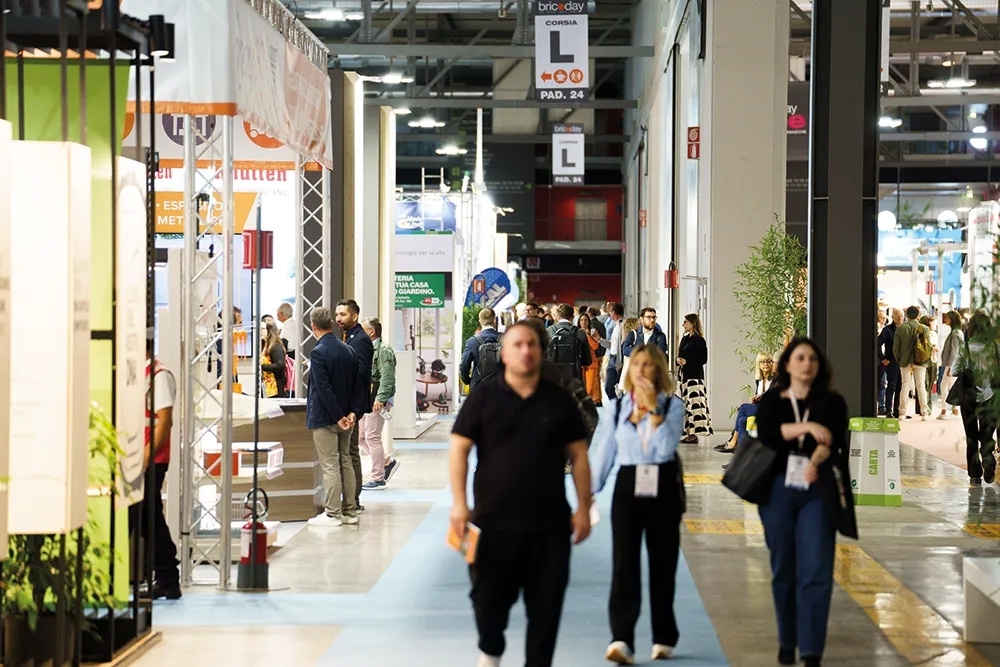
The garden industry within Italian DIY superstores remains one of the most dynamic and forward-looking segments of the market. In the first quarter of 2026, the category achieved a turnover of €130.6 million, representing growth of 8.3% compared to the same period a year earlier. This confirms the garden industry’s role as a strategic growth driver within the DIY industry, at a time when other segments are under pressure. This is reported by the Italian trade fair Bricoday, to be held at Fiera Milano–Rho on 23–24 September 2026, based on Nielsen Q measurements.
This development marks a structural shift: gardening is no longer a seasonal activity, but an integral part of contemporary Italian lifestyle. In Italy, too, the outdoor space is seen as an extension of the home, a place where well-being, aesthetics and functionality come together.
Lifestyle over seasonality
The growth of the garden industry is no fluke. As early as 2025, when the total DIY market in Italian superstores recorded a 5.9% decline, Garden managed to achieve slight growth of 1%. Recent figures confirm that this trend is accelerating. Moreover, the +8.3% growth in the first quarter of 2026 is well above the +4.1% growth of the previous half-year. This development reflects a cultural shift: Italians are investing more and more in their outdoor spaces, regardless of the season. Gardening is seen as a form of self-care, relaxation and personal expression. The garden is no longer merely a functional space, but a fully-fledged part of daily life.
Safety, quality and ‘Made in Italy’ as key purchasing drivers
Analyses by Bricoday and NielsenIQ show that consumers are becoming increasingly discerning in their product choices. 63.4% of Italians consider safety to be an essential criterion. Products must be certified and made from materials that are safe for people and the environment. This is directly reflected in the sales figures for the most dynamic categories:
The Plant and Soil Care sub-sector is growing by +18%, driven by demand for high-quality, reliable formulations. Irrigation and cleaning systems are up by +13%, partly due to the increasing focus on water conservation. Live greenery is up by 12%, clearly demonstrating the role of plants and flowers in promoting well-being
Made in Italy
Furthermore, ‘Made in Italy’ is playing an increasingly important role. 51% of consumers value Italian origin, mainly due to its association with quality and controlled supply chains. Among the over-65s, this percentage rises to over 60%. This target group forms a stable, loyal base for the industry, driven by safety, sustainability and reliability.
Technological innovation drives motorised gardening
Following a challenging 2025, the motorised gardening category is showing growth once again. Turnover is up by +10%, whilst volumes have risen by as much as +19%. The main driving force is the shift towards battery-powered, cordless and quieter equipment. These products therefore fit seamlessly with today’s needs: greater comfort, less noise pollution, higher sustainability and easier use. Consumers are willing to invest more in technology that simplifies their gardening tasks and enhances their quality of life.
Two worlds, one market: Living & Decor and Technology
The Garden inudstry is characterised by a dual structure: Living & Decor encompasses furniture, decoration and plants. Technology focuses on maintenance, equipment and care. This dichotomy reflects the changing consumer: emotional and functional, aesthetic and practical. This is forcing retailers to update their business models. The future lies in ‘omnichannel’, where the physical shopping experience, digital support and inspiring content come together. Consumers expect guidance, personalisation and an emotional connection to the purchasing process.
The Garden industry has therefore become a strategic pillar within the Italian DIY market. The segment reflects the way Italians live today: with a focus on well-being, sustainability, quality and technological innovation.