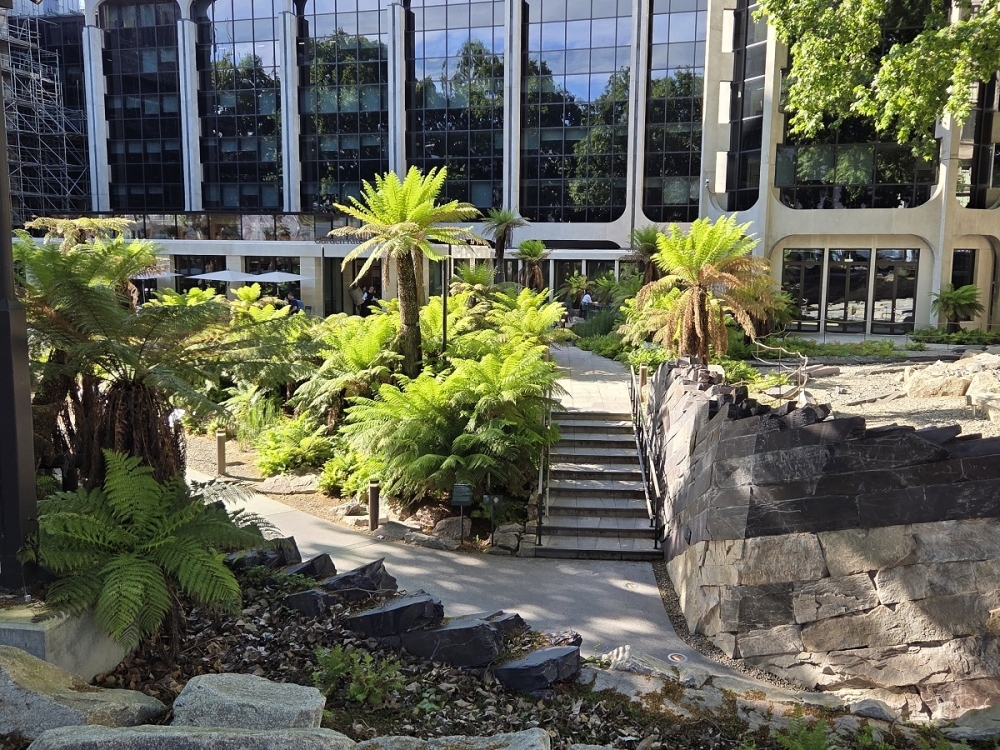
The Evolution Garden at the Natural History Museum in London
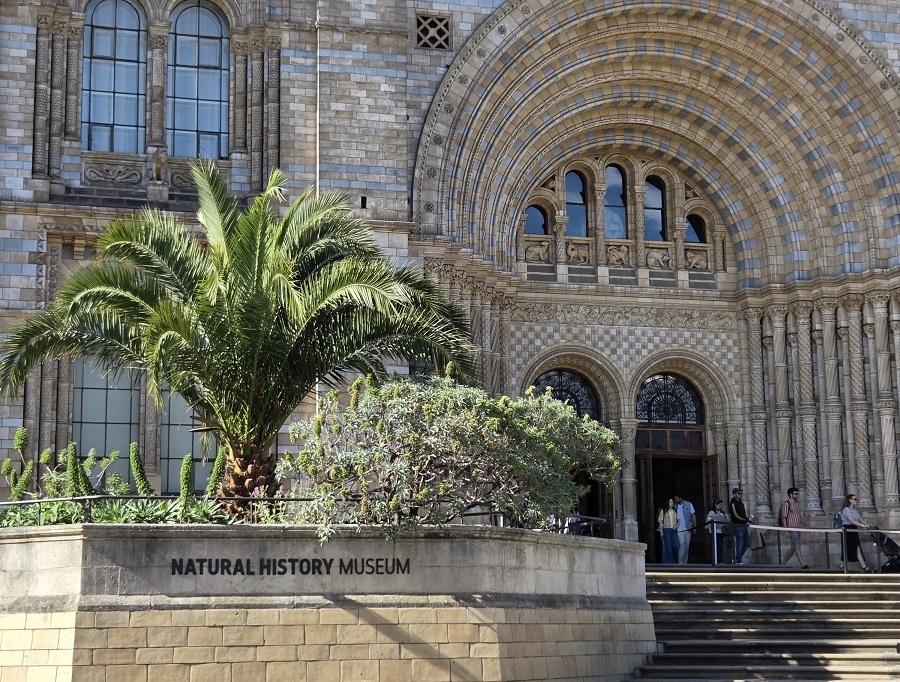
Anyone who loves dinosaurs is bound to be thrilled by the Natural History Museum in London. The venerable, almost cathedral-like building houses a wealth of fossils as well as dinosaur skeletons. The museum demonstrated its innovative spirit by commissioning two new gardens: the Nature Discovery Garden and the Evolution Garden.
For the first time in 140 years, the areas adjacent to the museum have been completely redesigned. Both new gardens are part of the Urban Nature Project, which covers 20,234 square metres in the heart of London. The Nature Discovery Garden is situated in front of the museum’s west wing, whilst the area in front of the east wing is dedicated to Earth's history.
Multi-award-winning garden project
In July 2024, the two new museum gardens opened their doors to explorers of all ages – the visitors. Together with the Evolution Garden, the Nature Discovery Garden offers a haven for wildlife in the heart of London. Both gardens help people develop a connection with nature in a big city.
A wide range of foundations, companies and private individuals have made this major garden project possible. Both new gardens are open to the public free of charge, though they close about an hour earlier than the museum.
The new gardens have received a very positive response. They have won several awards, including the “Building Project of the Year over £20m” and the “International Holcim Awards 2023 – Europe Award Silver”.
Learning through fun and the joy of discovery
The extraordinary Evolution Garden is dedicated to the origin of life on Earth. It reflects this as a green world of discovery that takes visitors on a journey through the evolutionary history of the plant and animal kingdoms, as well as the rocks on our planet.
Visitors entering the garden from Exhibition Road find themselves directly in the Evolution Garden. You begin your journey from this entrance through 2.7 billion years of our planet’s history. The path leading from the east entrance into the Evolution Garden, shaded by large trees, serves as a timeline in itself: information embedded in the ground refers to various geological eras.
The next thing that catches your eye is a large dinosaur skeleton in front of the museum building and a lush garden dominated by tree ferns, horsetails and other green plants. The history of life is presented in a captivating way, from the first organisms in the water through the emergence of the first land-dwelling creatures to the dinosaurs, exemplified by the large, 21-metre-long dinosaur skeleton in front of the museum: This bronze Diplodocus carnegii is the star of the garden, surrounded by plants and rocks from the Mesozoic Era.
The garden offers a captivating overall experience that combines beauty, fun and learning opportunities. With its flora and unique atmosphere, it transports visitors of all ages back to those geological eras when life moved from water to land and dinosaurs roamed through fern forests. Plants from this era can be found in the Evolution Garden, contributing to its magical, primeval atmosphere.
Fascinating collection of plants
Regarding winter protection, Suzanne Patman, Head Gardener at the Natural History Museum, says: “Our gardens are mainly home to plants from temperate climates, which thrive within London’s city limits, where it generally remains slightly warmer than outside the city. However, we wrap our tree ferns in hessian over the winter and cover their crowns with a layer of leaf mould to provide them with extra protection – whilst tree ferns can often survive a winter in London, our older specimens in particular would be expensive to replace, so we prefer to play it safe.”
The extensive plant list for this garden is divided into different periods of geological history, such as the coal forests and the age of the dinosaurs. The list includes, amongst others, many fern species, as well as Equisetum hyemale and E. variegatum, Metasequoia glyptostroboides, Dicksonia antarctica, and Wollemia nobilis. It also features plants such as Podocarpus salignus, Araucaria araucana, Cunninghamia lanceolata and Cycas revoluta.
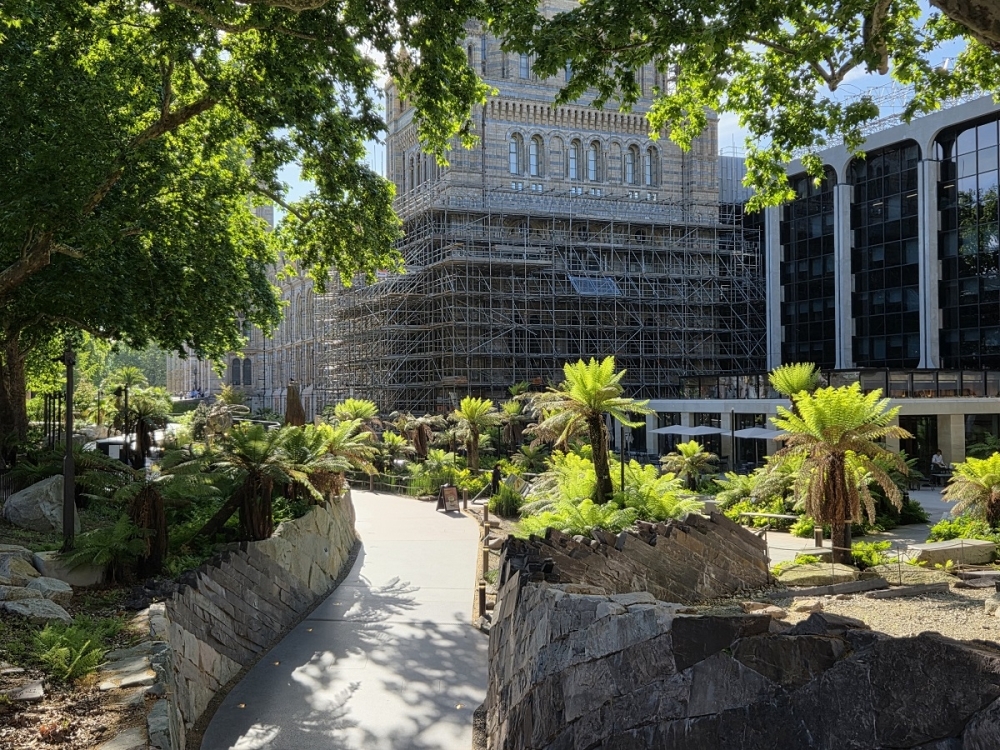
The evolution from aquatic life to life on land is illustrated, amongst other things, by small metal sculptures of the respective creatures mounted on the high rock faces. Relevant information is provided alongside each one. Some of the animals can also be spotted as metal inlays on steps and paving slabs. For those interested in geology, the path – designed to resemble a canyon – leading to the underground station entrance is particularly fascinating. It is lined with many different rocks from all over the UK.
Text and photos: Anke Bührmann
.jpg)