Joost Sterke: ‘The biggest challenge? Not the market, but the people’
The market for trees and hedge plants remains healthy. Joost Sterke has no doubt about that. According to him, the real challenges for the coming years lie elsewhere: in securing enough skilled workers, further mechanisation, and adapting to stricter requirements regarding water management and crop protection. He sees GrootGroenPlus as the event where the industry both reflects on the past season and looks ahead to the next.
When asked how he looks back on the past season, Joost Sterke gives a straightforward answer. “Good. Maybe even a little better than the year before.” He does not feel the need to say much more.
According to Sterke, the tree nursery industry has entered calmer waters in recent years. The spectacular growth of the past has given way to a stable market, where companies are steadily building for the future.
“Nowadays, if you grow by five or ten per cent, that's already a good step.”
He is therefore not particularly concerned about sales. He feels that the demand for high-quality trees and hedge plants will remain. The real question is how companies can continue producing under changing conditions.
Mechanisation is no longer a choice
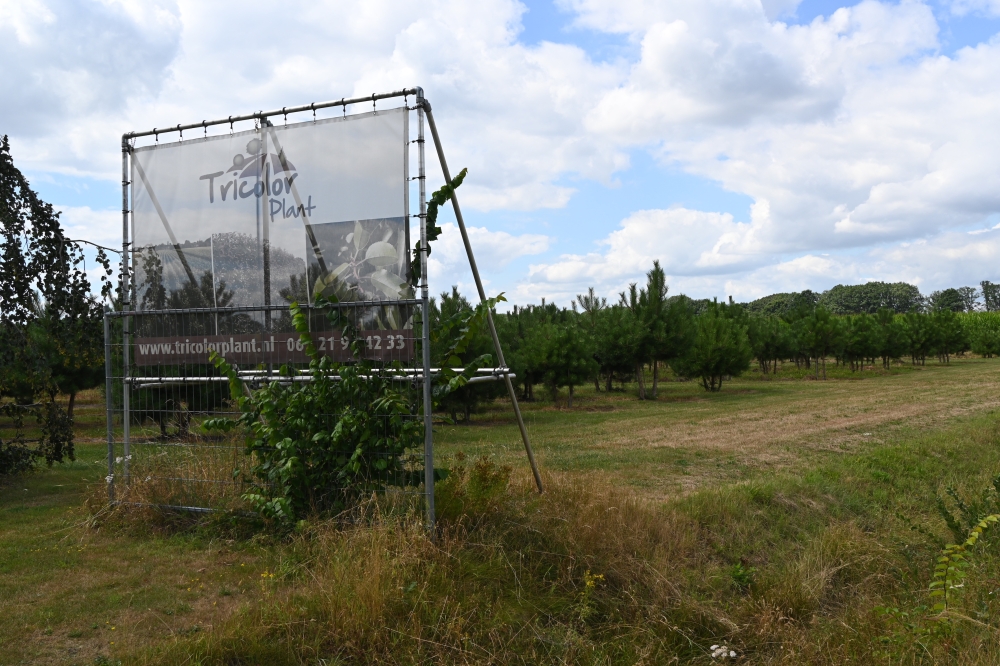
Sterke sees this development every day in practice. At Tricolor Plants, the nursery he founded together with two partners, the guiding principle has long been to mechanise wherever possible.
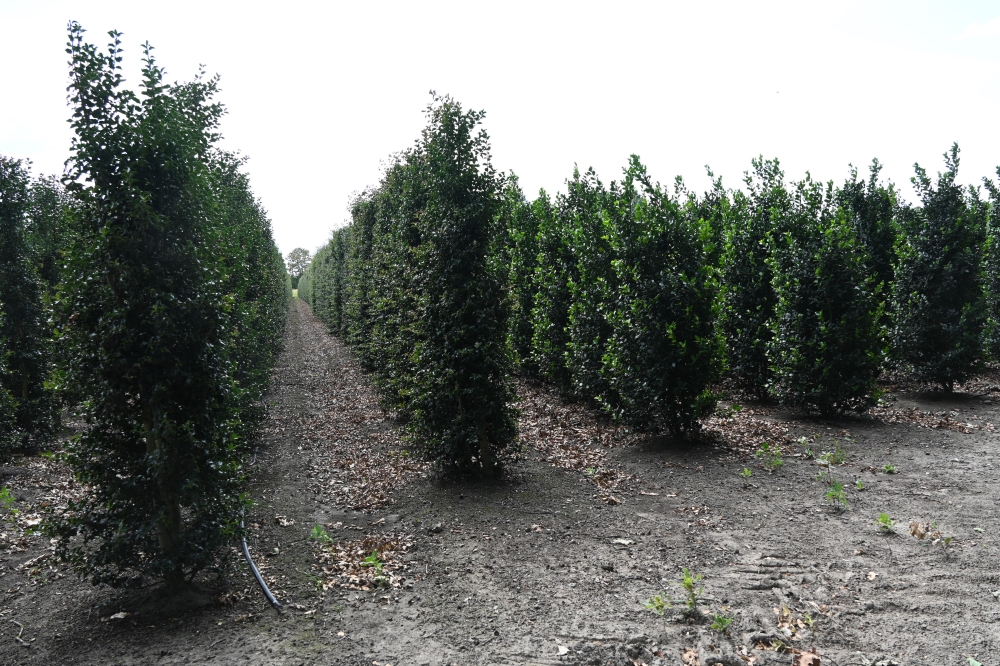
The company focuses on larger-sized hedge plants and was designed from the outset around extensive mechanisation. Not because technology is a goal in itself, but because it is essential for producing efficiently and consistently.
“You can certainly grow, but you also have to be able to manage that growth.”
According to Sterke, it is about more than just machines. Logistics, planning, staffing and quality all need to grow alongside the business. That is why he prefers controlled growth over simply expanding the number of hectares.
A new generation is essential
The same applies to the organisation itself. Tricolor Plants recently completed a generational transition. One of the original partners stepped down and two younger colleagues joined the company.
“You have to make room for the next generation in time.”
According to Sterke, new people bring continuity, but also fresh ideas. That is important in an industry that is changing ever more rapidly.
Labour will become the bottleneck
While Sterke believes the market will remain stable, he sees the labour market very differently.
“Labour will become the biggest challenge.”
His own company has a strong team, but he notices that fewer young people are entering the industry. Employees who can develop into management or specialist roles are becoming increasingly scarce.
Mechanisation helps companies use labour more efficiently, but it will never replace skilled professionals, he says.
“In the future, we will need people who can manage businesses and understand the technology. That is where the biggest challenge lies.”
Moving forward together
Sterke also expects the industry to continue evolving in the areas of water quality and crop protection. Tree nurseries will increasingly need to demonstrate how they manage water, emissions and crop protection.
He does not believe in confrontation but in cooperation. At his own company, for example, water quality is monitored in collaboration with the regional water authority.
“You need to know what is leaving your business through runoff. That is something you have to work on together.”
According to him, new technologies for precision applications, mechanical weed control and biological solutions offer plenty of opportunities. At the same time, he believes growers should be given sufficient time to implement these innovations responsibly.
GrootGroenPlus
After a year's absence, Sterke will return to GrootGroenPlus this autumn. Last year he skipped the trade fair because his company celebrated its 30th anniversary, but this year he is looking forward to meeting customers and colleagues again.
For him, GrootGroenPlus is much more than just a trade fair.
“You meet customers, exchange experiences and look ahead to the new season together.”
That also reflects his expectations for the years ahead. He believes the market will remain healthy and that innovation will continue to move forward. Ultimately, however, the success of companies will depend above all on the people who work there.
“The market will still be there. The real question is whether we will still have enough skilled professionals to do all the work.”
.JPG)