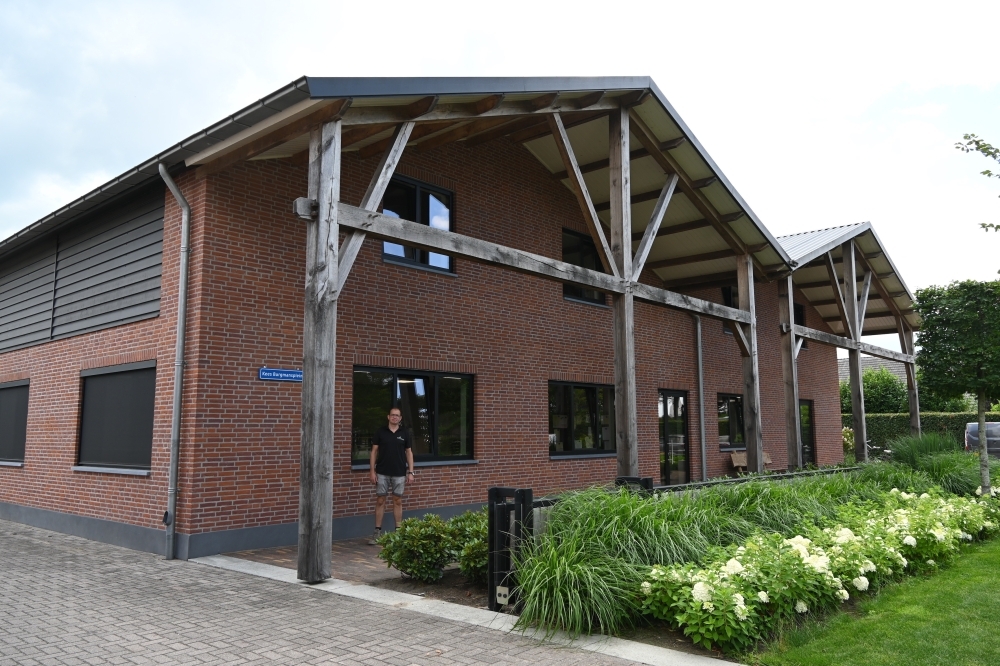
Kees Burgmans: ‘Extreme weather requires a different way of doing business’
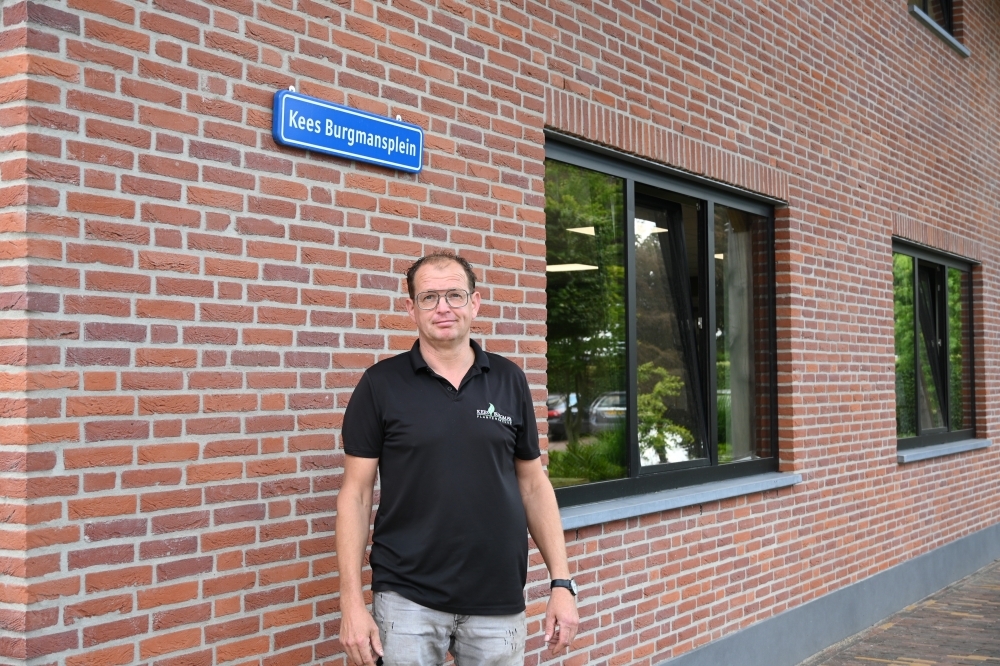
Snow in spring, a dry spell, followed by tropical heat. The past season once again demanded a great deal from tree nurseries. Yet Kees Burgmans of Kwekerij Burgmans in Haaren looks back on the first half of the year with satisfaction. The market remained surprisingly stable. According to him, the biggest challenge does not lie on the sales side, but in how entrepreneurs prepare their businesses for an increasingly unpredictable climate. He sees GrootGroenPlus as the perfect moment to look ahead together.
“The first half of the year was actually better than expected.” Burgmans does not have to think long when asked to reflect on the past season. That is remarkable, because the weather conditions were far from favourable. The season began with snow and frost, followed by a dry period. The sector then had to cope with extreme heat once again.
Despite these unpredictable conditions, demand for trees and plants remained strong. June, in particular, turned out better than expected. Burgmans therefore sees no reason to be pessimistic about the market.
“Sales are good. To be honest, I'm not too worried about that.”
According to him, the market has certainly changed over the years, but it has by no means collapsed. Demand remains strong and entrepreneurs are finding each other more easily. His focus is therefore much more on the conditions under which production has to take place.
The weather increasingly determines the working day
Where growers once focused mainly on production and sales, the weather now plays a much greater role in day-to-day operations. Not only because temperatures are rising, but especially because extreme weather events follow one another more rapidly.
“One moment you have frost, and a few months later you're dealing with temperatures approaching fifty degrees.”
Those fifty degrees are not just a theoretical figure. During heat waves, temperatures inside the propagation tunnels really do reach those levels. That has immediate consequences for the crop.
“Then you see complete plant sunburn rather than the familiar leaf scorch. The plants are put under enormous stress.”
According to Burgmans, this requires a different way of doing business. Rather than waiting for problems to arise, growers need to think ahead and invest in measures that make their businesses more resilient.
That is why he is looking closely at solutions such as shade screens and other forms of shading. These facilities may only be needed for a limited number of days each year, but on those days they can make all the difference.
“You have to be prepared for those few extreme days.”
Investing in certainty
For Burgmans, climate adaptation is no longer something for the distant future. In recent years, he has invested heavily in his company's water supply. Additional water reservoirs and extra water sources have been installed, making the nursery less dependent on external supplies.
“You try to control as much as possible.”
These investments do not necessarily pay for themselves immediately, but according to him they are essential. Prolonged droughts are likely to become more common, and irrigation bans cannot be ruled out. Investing now creates greater security for the future.
He sees the same approach reflected in crop protection. The range of available products is constantly changing and regulations are becoming increasingly strict. Even so, Burgmans remains confident.
“Some products disappear, but new solutions emerge as well. Manufacturers continue to innovate, and as a sector we keep looking for alternatives.”
According to him, the tree nursery industry has always adapted to changing circumstances. The coming years will be no different.
In the end, it is all about people
Although climate and water are becoming increasingly important, Burgmans believes the biggest challenge ultimately lies elsewhere.
“Labour will really become the biggest problem.”
He sees fewer and fewer young people choosing a career in the tree nursery industry. At the same time, almost every industry is competing for the same pool of technically and practically trained employees.
He experiences this within his own company as well. Good employees sometimes leave for other industries simply because they offer different opportunities or better employment conditions. This is a challenge faced not only by tree nurseries, but by the entire green industry.
Migrant workers will continue to play an important role in handling seasonal peaks, but for the long-term continuity of a business, a permanent team of committed professionals remains indispensable.
“You need people who take responsibility and grow together with the company.”
GrootGroenPlus as the start of a new season
For Burgmans, GrootGroenPlus is much more than a trade fair where products are presented. It is the moment when entrepreneurs, customers and suppliers meet, exchange experiences and look ahead to the new season.
Especially at a time when the industry must constantly respond to climate change, new regulations and a tight labour market, he sees great value in these meetings.
“You find out how colleagues are dealing with these challenges and it always gives you new ideas.”
That is why GrootGroenPlus remains an important milestone for him every year at the start of the new sales season.
Looking ahead with confidence
Despite all the challenges, Burgmans remains optimistic. Demand for high-quality trees and plants will continue, while new solutions for water management and crop protection are constantly being developed.
According to him, the greatest uncertainty does not lie in the market, but in the availability of skilled professionals.
“You can prepare for climate change. Preparing for staff shortages is much more difficult.”
In that, he neatly sums up the future of the industry. Running a tree nursery is becoming less and less about reacting to change and increasingly about thinking ahead, investing and building resilience.