- HOME >
- NEWS >
- Cultivation 07-08-2026
Quality Always Prevails
"You should take a little more time for yourself," his wife tells him regularly. Peter Verhoeven smiles when he says it. He turns sixty this November and, in fact, he would like to slow down a little. "But somehow I feel like I'm working more than ever."
It perfectly sums up the tree grower from Haaren. He is not working more than ever because he is determined to expand his business at all costs, but because he is determined to safeguard quality in everything he does. While many growers focus on expansion, larger production areas or new cultivation systems, Peter keeps asking himself one simple question: Can I maintain the quality?
"We could easily be ten times bigger if we had ten times more people."
Demand certainly isn't the issue. High-quality trees find buyers without difficulty. According to Peter, the real challenge is finding skilled employees. Experienced workers are becoming increasingly difficult to find, while field-grown tree production concentrates an enormous amount of work into just a few months. From October onwards, trees have to be lifted, sold and replanted. Ideally, he says, the nursery should stop deliveries for a week in mid-November just to focus on planting. In reality, however, orders keep coming in while the next season already demands attention. The workload remains high, both for Peter himself and for his team.
Yet there is no trace of frustration in his story. He simply accepts reality. Growth has never been an objective in itself. In fact, he would much rather reduce his working hours. So far, that has proved easier said than done.
That pragmatic attitude is reflected in almost every decision he makes.
When the conversation turns to container production, Peter is remarkably clear. Of course he understands the advantages. Container-grown trees can be supplied throughout the year and fit perfectly into today's market. But, as he points out, they also require an entirely different business model: water storage, a different cultivation system, different logistics and, above all, year-round work.
"Either you do something properly, or you don't do it at all."
For Peter, that says it all. He has deliberately chosen to remain committed to field-grown production. Not because he opposes innovation, but because he believes true excellence comes from making clear choices.
That certainly does not mean standing still. He experiences the changing climate just like everyone else. Spring started exceptionally well, with young trees establishing quickly. Then the rain stopped. Irrigation keeps the trees alive, he explains, "but it doesn't make them grow." For that, several days of steady rainfall are needed. It is the practical observation of someone who spends every day among his trees and knows that nature will always remain his most important partner.
The same philosophy applies to crop protection. A few aphids are no reason to reach for the sprayer.
"Just leave the aphids alone," he says with a smile.
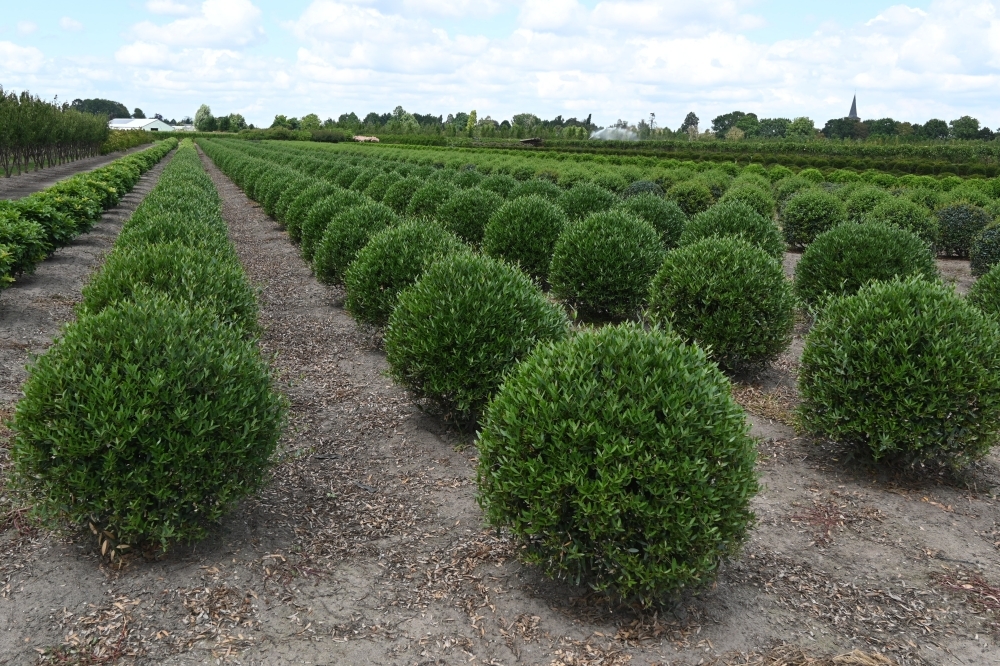
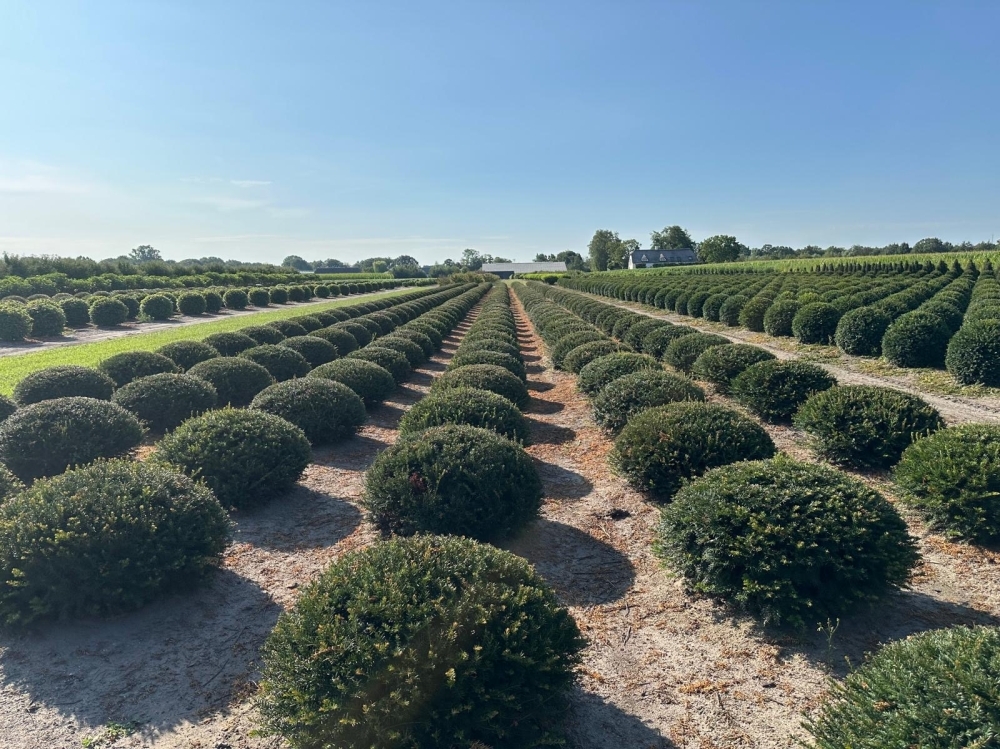
Natural predators often solve the problem themselves. Only when tree quality is genuinely at risk, he intervenes. For the yew beetle, a serious pest in one of the nursery's main crops, effective new products have fortunately become available. Apart from that, his approach remains straightforward: only intervene when it is truly necessary.
His commercial decisions follow exactly the same principle. Peter refuses to compete in a race to offer the lowest price. A tree only leaves the nursery once it meets his quality standards. If that moment has not yet arrived, it simply stays in the field for another season.
"Quality always prevails."
It is far more than a catchy slogan. It is the guiding principle behind every decision Peter makes. He would rather leave a tree in the ground for another year than sell a product he does not fully believe in. That philosophy has shaped Boomkwekerij Peter Verhoeven into the company it is today.
Over the coming years Peter hopes to gradually step back from day-to-day operations. His son, Ries, is taking on increasing responsibility within the family business. That gives him confidence. Not because everything should remain exactly the same, but because father and son share the same philosophy. Ries, too, believes that quality should always come before rapid expansion and sees the strength of field-grown production.
Perhaps that is Peter Verhoeven's most important message. At a time when the industry often focuses on scale, efficiency and production volume, he consciously follows his own path. No compromises on quality. No half measures. And no growth if it comes at the expense of the product.
Because, in the end, quality always prevails.