- HOME >
- NEWS >
- Cultivation 14-08-2026
Heat could spell the end for Norway spruce in the Ardennes
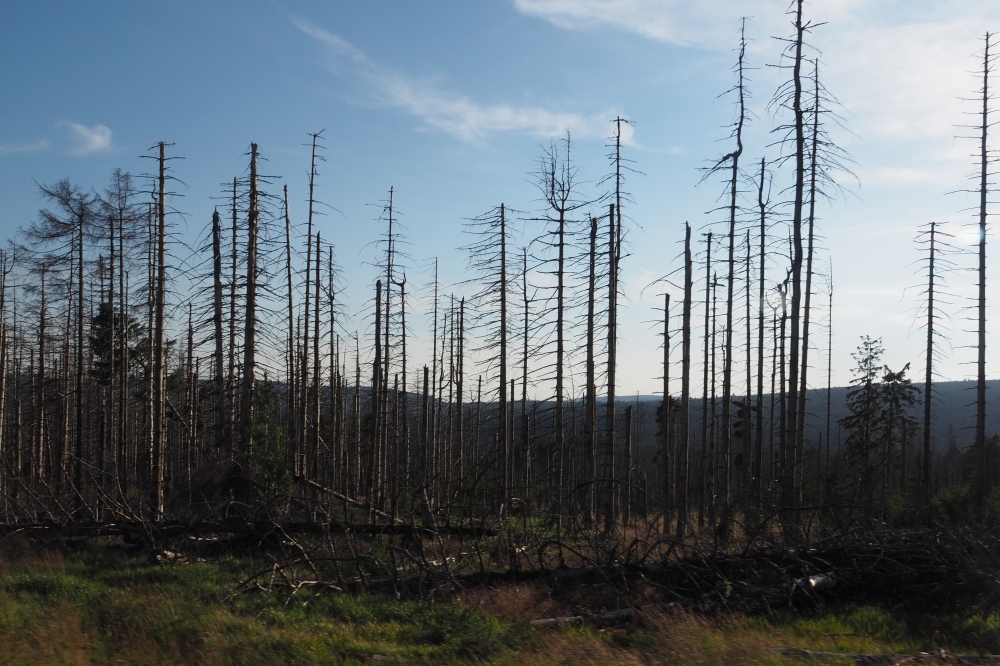
Persistent heat and drought are leaving increasingly visible marks on Europe’s forests. Familiar tree species such as beech, birch, oak and lime are under pressure. For the Norway spruce in the Ardennes, the situation is even more serious. If several more extremely dry summers occur in the coming years, these characteristic spruce forests could largely disappear within a decade.
Weeks of hot weather without sufficient rainfall cause the soil to dry out progressively. Trees can then no longer take up enough water to maintain their crowns. Some species respond visibly by shedding their leaves prematurely or showing early autumn colour. In other trees, growth slows down or parts of the crown begin to die back.
According to Kris Vandekerkhove of the Flemish Research Institute for Nature and Forest (INBO), every tree species has its own strategy for coping with drought. Beech trees attract attention because the symptoms of drought stress are often clearly visible. Birch, however, also appears poorly equipped to withstand prolonged drought. As birches frequently grow as smaller trees among other species in a forest, their decline is less noticeable.
Eight-toothed spruce bark beetlebenefits from drought
The condition of Norway spruce in the Ardennes is particularly alarming. The species accounts for a significant share of Wallonia’s forest area but has already lost considerable ground in recent years. Tens of thousands of hectares of Norway spruce have died.
The direct cause is often the European spruce bark beetle, also known as the eight-toothed spruce bark beetle. This small insect bores galleries beneath the bark, disrupting the tree’s transport of water and nutrients. Healthy Norway spruce can usually repel an attack by producing resin. After a prolonged dry period, however, the trees lack the water and energy needed to defend themselves effectively. This gives the beetle every opportunity to attack weakened trees.
Cold and wet periods would normally slow the beetle’s development. Milder winters and longer, warmer summers allow it to reproduce more rapidly and, in some years, produce several generations.
Furthermore, Norway spruce naturally belongs in the cooler regions of Central and Northern Europe and in mountainous areas. The species was planted extensively in the Ardennes around a century ago for timber production. As the climate changes, the trees are increasingly growing outside their optimum conditions.
Vandekerkhove warns that, following several more extreme summers, almost all Norway spruce could disappear from Wallonia within five to ten years. The extensive dieback previously seen in Germany and the Czech Republic demonstrates just how quickly this development can unfold.
Beech is vulnerable too
The outlook for beech, oak, birch and lime is less dramatic. These species are unlikely to disappear completely from the region, but their growing site is becoming increasingly important.
Beeches on dry, sandy soils, for example, face additional risks. The same applies to trees in heavily paved urban environments, where root space is limited and rainwater is rapidly drained away. Historic beech avenues are also vulnerable. The trees often stand in open landscapes without the shelter and humid microclimate provided by a closed forest canopy.
Owners will therefore increasingly have to choose between trying to retain weakened trees for longer or gradually replacing them with species better able to withstand heat and drought.
Not simply a matter of importing trees from the south
Finding alternatives is more complicated than importing tree species from Spain or southern France. The future climate of Northwestern Europe will not be an exact copy of today’s Southern European climate. Trees here are likely to face dry, hot summers as well as wet winters, flooding and late spring frosts.
This is why researchers are also looking at the Balkans. Tree populations in parts of this region are accustomed to both severe winters and hot, dry summers. Research is also being conducted into different provenances of species that already grow in Northwestern Europe. A broader genetic base may improve their ability to adapt to extreme weather conditions.
Moving species and provenances does, however, involve risks. Pests and diseases can be introduced with plant material. A new tree species could also serve as an intermediate host for a disease or pest that threatens native trees.
The transition therefore remains a careful balancing act. Doing nothing is not an option, but introducing new species too quickly may create problems of its own. For now, mixed forests containing a variety of species and provenances appear to offer the best starting point.
The disappearance of Norway spruce shows how rapidly climate change can alter the composition of forests. The challenge is no longer to preserve the existing forest landscape at all costs, but to create forests capable of continuing to function under increasingly variable and extreme weather conditions.