- HOME >
- NEWS >
- Cultivation 17-08-2026
Sheep’s wool instead of plastic anti-root fabric: an interesting experiment
Weeds are something growers want to avoid at the nursery, which is why anti-root fabric is used. However, this is generally made of plastic. Treeport’s Agrobiodiversity working group is experimenting with an alternative. GGP.News spoke with working group member Joyce Oomen about the project. Oomen emphasises that this really is still an experiment: could sheep’s wool be a suitable replacement for plastic anti-root fabric?
Joyce Oomen: “I would like to emphasise that we are currently experimenting with a natural alternative and, although we are very positive about it, it may still be too early to provide conclusive figures and results. However, the results so far are very encouraging. We obtain the wool from local private sheep farmers, who often dispose of them as waste after shearing. That is, of course, a terrible shame, because there is so much value to be gained from such a beautiful product!”
When it comes to the composting of the sheep’s wool, the working group is also still in the experimental phase: how long does it take to decompose? Oomen: “We cannot give a definitive answer to that at the moment. We are currently in our third year of trials and the fleeces are still holding up well. One advantage, in any case, is that it does not get as hot as plastic. After all, it is a natural product.”
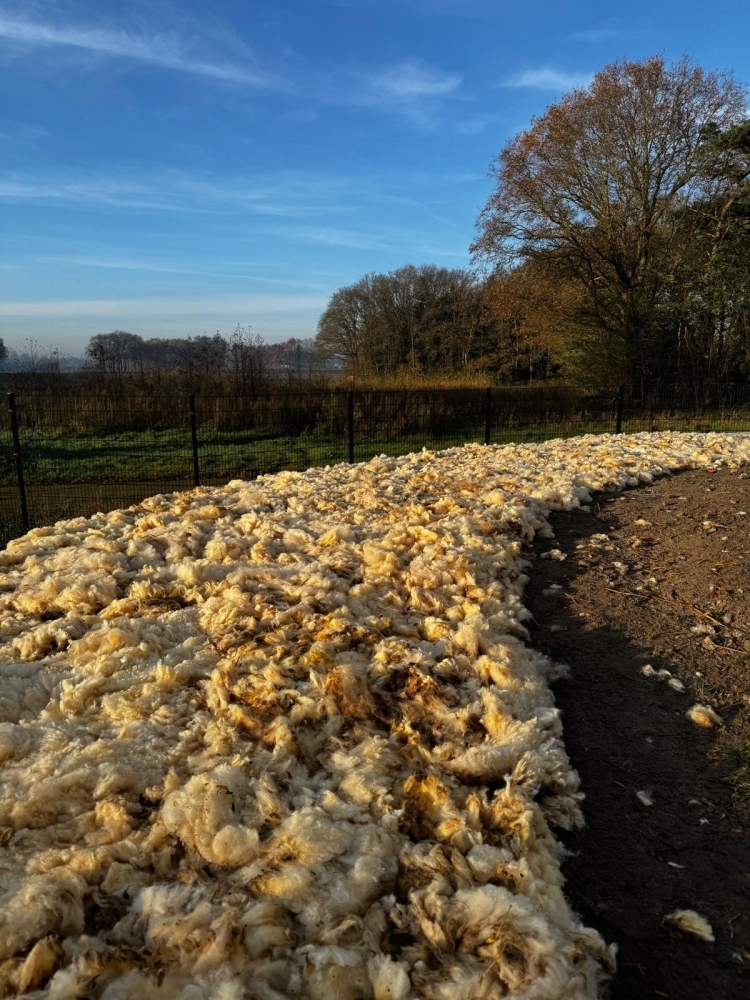
Once applied to the soil, the fleece helps regulate moisture. Water passes through the fleece into the soil, while fats and other nutrients (minerals) from the fleece directly enrich the soil. In addition, the soil dries out less quickly. When larger areas are covered, the sheep’s fleece is held in place using netting.
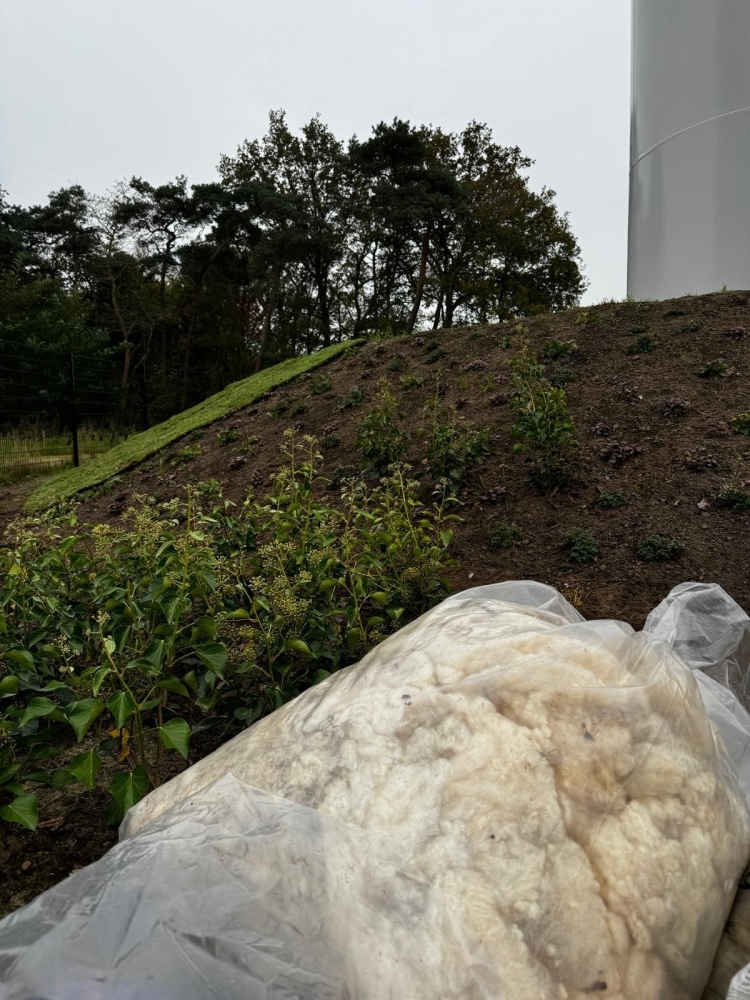
“We use the entire fleece, just as it is delivered in bags after shearing. Pellets are already commercially available, but that is not the product we work with or use in our trials.”
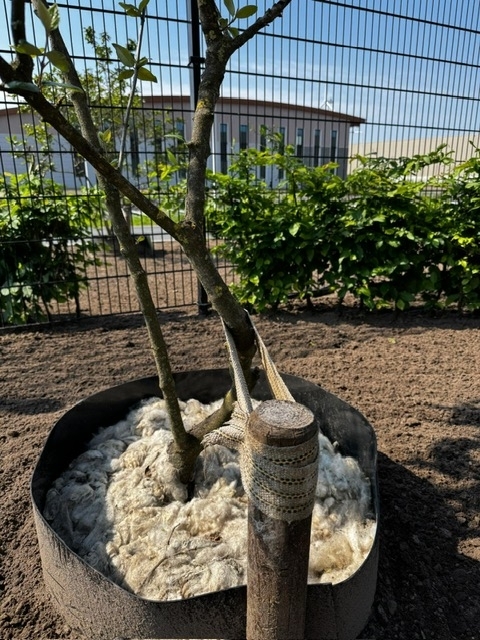
“It is now also being used at BCT,” Oomen adds. “We have various applications there, for example as a covering on top of an embankment. But also as a covering within the watering rings around newly planted trees and shrubs. For now, we are monitoring our findings and initially sharing them with our Treeport members.”
Naturally, we also wanted to know whether the working group sees any potential commercial applications. Joyce Oomen’s answer is very clear: “For now, that is absolutely not our aim or intention. Above all, we want to contribute ideas towards a more natural and cleaner way of working. In this case, that means using or converting a waste product into a very valuable addition, both at the nursery and in public spaces. The sheep fleeces really create a much more natural appearance in the landscape than anti-root fabric.”
.jpg)