Growing without limiting yourself
Boomkwekerij Verpaalen is expanding in acreage, production and customer base. But for Hein Verpaalen, growth is not simply about producing more plants. Expansion should primarily create room to make better choices – in cultivation, in the assortment and for the customer. ‘The right plant for the right customer, that’s what it’s ultimately about.’
‘Sales determine everything’
Hein Verpaalen does not mince his words. You can be an excellent grower and have everything in order as an entrepreneur, but ultimately you still need to sell your plants. ‘If I don’t have the sales, I don’t have the resources to keep growing either.’
At the moment, sales are certainly not the problem. With some varieties, the last cuttings have barely been planted and customers already want to buy them. That may sound like a luxury problem, but it requires choices. Hein would rather not sell all of a scarce crop to the first customers who come along. ‘I’d rather have six customers who all get a little less than two customers who get everything and four who get nothing.’
This characterises his approach to business: spread the risk. Do not become too dependent on one customer, one market or one product group.
More room to manoeuvre
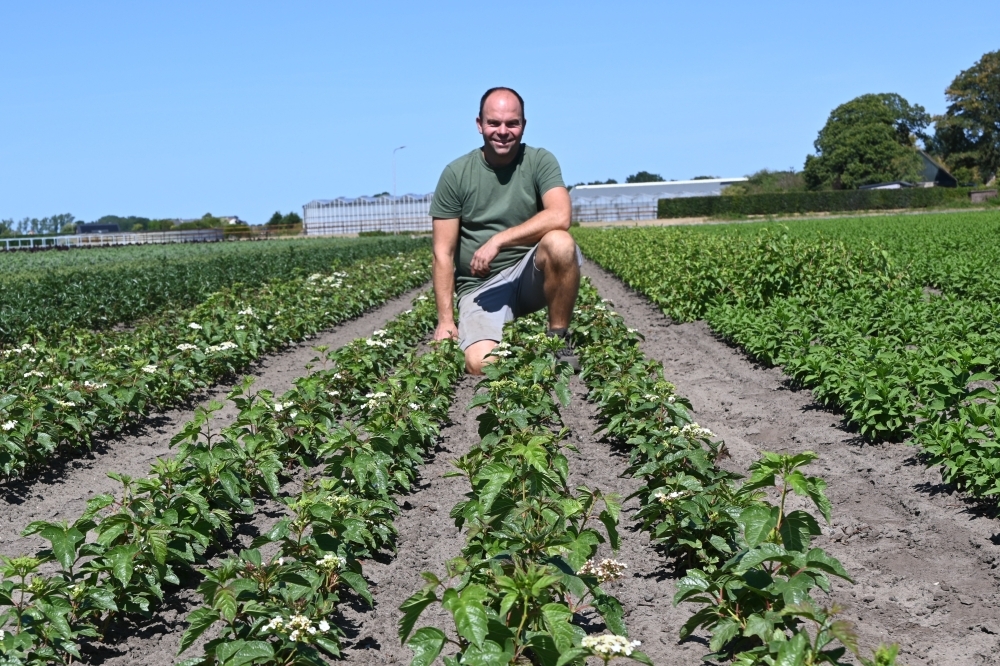
Boomkwekerij Verpaalen is certainly growing. Production is increasing by around 10 to 15 percent annually, while the acreage has expanded from approximately 21 to 38 hectares. However, those additional hectares are not intended to be planted as quickly as possible.
‘We had outgrown our space,’ Hein explains. Fields had become so intensively occupied that the available space increasingly determined where a crop had to be planted. The additional land allows Verpaalen to organise crop rotation more effectively and create room for green manures and break crops. A field can now be properly prepared instead of being planted simply because the plants have nowhere else to go.
More land does not necessarily mean less work. A green manure crop also needs attention. ‘That has to be a good crop too if you want it to be successful.’
The real gain is freedom of choice: better fields, better crop planning and, ultimately, a better product.
The right plant for the right customer
The same philosophy is reflected in the assortment. Verpaalen specialises in young plants of deciduous shrubs and also works with various brands and exclusive varieties. Hein does not want to focus exclusively on producing the largest or most expensive plants.
For one customer, a heavy shrub may be exactly the right product, while another is looking for a good, affordable plant. ‘The right plant for the right customer,’ as Hein says.
That, too, is a form of risk diversification. Larger plants, for example, have an important market in Germany. But if you focus entirely on that segment and the German market weakens, you immediately have a problem. Different plant sizes, product groups and markets make the business less vulnerable.
Hein has seen just how quickly a market can change with Hydrangea paniculata. A few years ago, supply was so abundant that some batches were difficult to sell. Today, certain varieties sell out early. Strong demand today therefore offers no guarantee for tomorrow. That is why Hein bases his production planning on several seasons, customer enquiries and developments within his network.
Two Green Grand Prix winners
Remarkably, Verpaalen has also produced two varieties of its own: Cornus ‘Nightfall’ and Cornus ‘Miracle’. Both won the Green Grand Prix at GrootGroenPlus. In addition to the plant’s appearance, the award also takes cultivation performance into account, with entries assessed by a jury of renowned industry specialists.
Yet Hein does not consider himself to be a breeder.
‘Those were lucky shots.’
Professional breeding is a discipline in its own right, he says. It requires expertise, space, time and money. Propagation and selection fit the Verpaalen business, but a complete breeding programme does not.
For the introduction and market development of distinctive varieties, the company works with partners including Plantipp. Such a partner brings not only specialist expertise, but above all an international network. Nightfall and Miracle have now also found their way to North America, where they are marketed through major plant brands.
The curiosity remains, however. On a small scale, Hein continues to experiment with new species and crops. ‘If you don’t try, you’ll never know.’
The nursery remains the foundation
Marketing and international networks are becoming increasingly important, but ask Hein where he gets his energy from and the conversation inevitably returns to the nursery. His brother Chris focuses more specifically on sales and marketing, while Hein prefers to keep an eye on the entire business and, above all, the cultivation side.
For him, the work does not end when a plant is lifted from the field. ‘Storage is just as important as cultivation.’ A plant can be perfectly cared for throughout the summer, yet still lose quality through incorrect packaging or storage. Particularly with a wide assortment, batches must be correctly registered, packed and delivered to the right customer at the right time.
And that brings everything together.
Hein wants to grow and sees plenty of opportunities to do so. But growing the company is not an objective in itself. More land creates room for better cultivation. A broad assortment and different customer groups spread the risk. And specialist partners help distinctive products reach new markets.
Growth should above all give Boomkwekerij Verpaalen more room to continue making the right choices.
Because ultimately, for Hein, it comes down to one thing: the right plant for the right customer.