- HOME >
- NEWS >
- Cultivation 07-09-2026
"Let's see how it works somewhere else first"
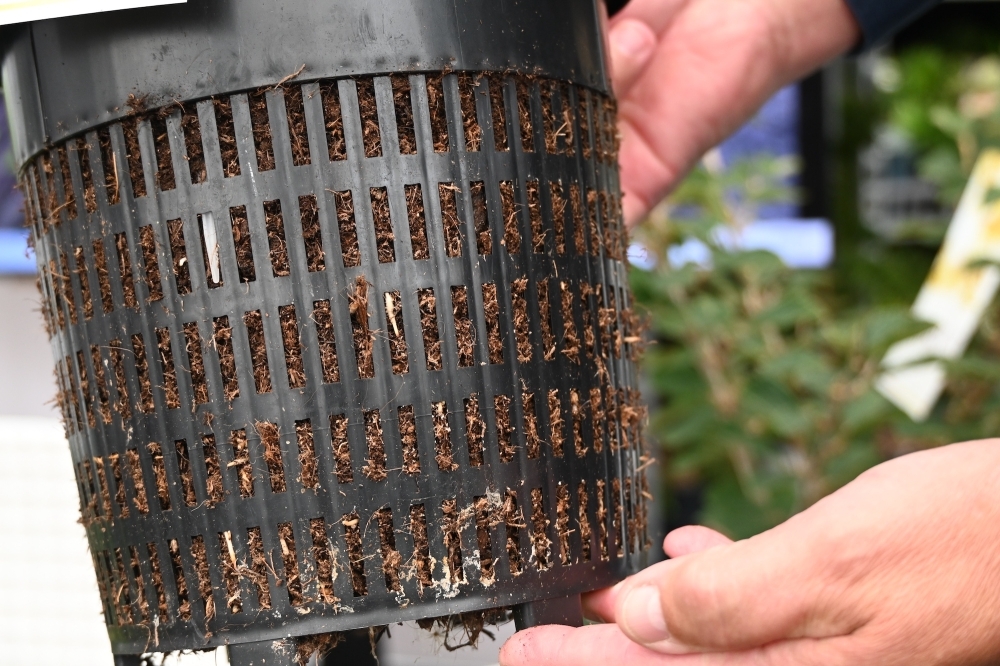
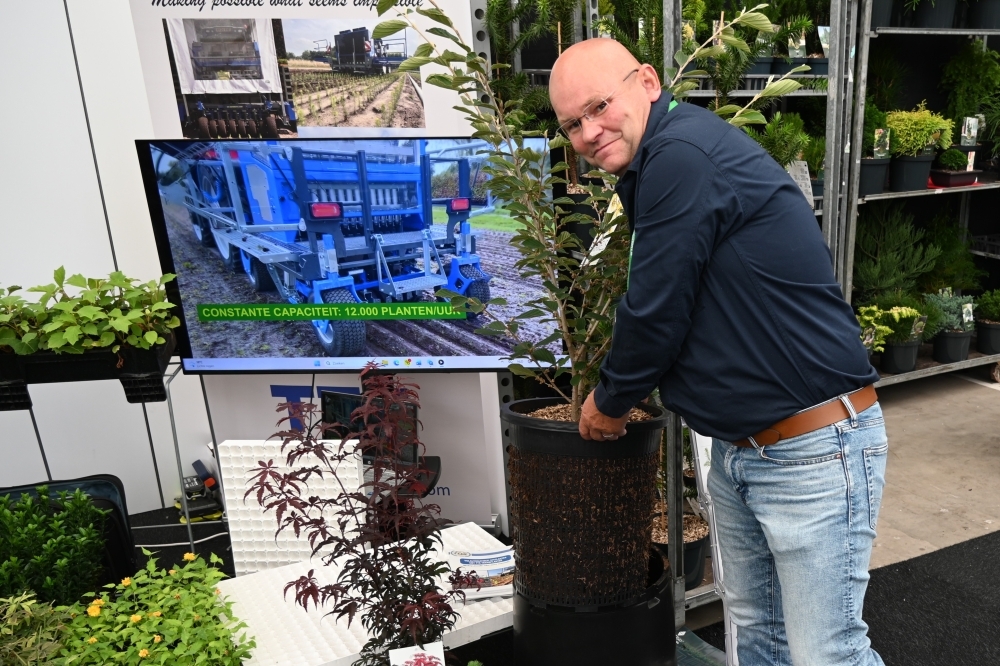
Introducing new technology into the nursery industry sometimes requires almost as much patience as growing a tree. TTS is introducing a new pot system designed to improve root development through air pruning. Rob Tolenaars of TTS and John van den Bosch, who works for Telermaat and represents TTS, have become familiar with the typical first response from growers: interesting, but let's see if it actually works first.
“The nursery industry is a world of its own,” says John van den Bosch of Telermaat with a smile. “Growers want to see everything for a year or two first. Preferably at the nursery next door.”
Rob Tolenaars of TTS is familiar with that response too. Nevertheless, the company is presenting something new at the trade fair: a pot system that uses air pruning to keep roots within the container.
Not because the market was waiting for yet another type of pot, Van den Bosch stresses. The development was prompted by a problem growers are encountering increasingly more often.
“We are getting increasingly more questions about root burn and about how to keep as many healthy roots as possible inside the pot.”
In conventional container production, roots can grow through the bottom of the pot and into the substrate or soil beneath it. When the plant is subsequently moved, those roots are torn away. This causes damage and stress, particularly in plants in which several years of cultivation have already been invested.
Air instead of pruning shears
The new system aims to prevent this by using air. The plant sits in an inner pot placed inside a ventilated outer pot. This keeps the root ball from sitting directly on the ground and allows air to circulate around it.
When root tips reach the outside, instead of continuing to grow they are effectively pruned by the air. The plant then produces new fine roots further back inside the root ball.
For TTS, this is not a stand-alone innovation. The principle builds on the Air technology the company already uses for smaller plant sizes. The idea is to start air pruning with young plant material and maintain the same principle throughout subsequent production stages.
“Once you are in that air-pruning cycle, you maintain a compact and healthy root system,” Van den Bosch says.
Not a pot for every plant
That does not mean TTS expects growers to replace their entire container field.
“There is no point putting a Spiraea in it if that plant performs perfectly well in a standard plastic pot,” Tolenaars says.
He sees the main applications in high-value plants and crops where root development can be a limiting factor. Acer and Hamamelis are cited as examples, while exclusive specimen trees may also be suitable.
For plants like these, Tolenaars says the calculation changes. It is no longer simply about what the pot costs, but what it delivers when an expensive plant grows more successfully and faces less risk of root damage or interrupted growth. The outer pot also remains with the grower and can be reused.
Labour is another consideration. Because the plants no longer root into the ground beneath the pot, they are easier to move. The pots can also be handled mechanically. For growers facing increasing difficulties in finding labour, that could become an important advantage.
Summer as a test
Then there is the question every grower will ask: does it work with Dutch growing conditions?
That is why TTS has opted for practical trials. In Zundert, the system is being tested at J. Bevers nursery, among other locations. According to Tolenaars, the hot summer produced some particularly interesting observations.
With conventional black containers, the outer surface can become extremely hot on warm days. Roots along the pot wall can be damaged and growth may stop. In the new system, an air gap separates the inner and outer pots. Combined with moisture, TTS says this creates a different microclimate.
During the trial, Tolenaars continued to see white, actively growing root tips even on hot days.
“They just kept growing. That is exactly what you want to see.”
TTS deliberately combines the system with drip irrigation. Water and fertiliser are supplied directly to the plant, allowing much more precise control of the root environment.
Give it a try
Tolenaars does not expect a single trade-fair demonstration to be enough to convince a grower.
The approach is therefore deliberately practical. A number of growers are being given the opportunity to trial the system and provide feedback. If it works in their production system, they can scale up. If it does not, TTS wants to know that too.
“In a way, it is a form of market research,” Tolenaars says. “We already know the principle works elsewhere. Now we want to see how it performs here in the nursery industry.”
Perhaps that approach is particularly well suited to the industry in which TTS operates. Nursery growers do not automatically embrace every new technology. They want to see the plants, inspect the roots and, above all, know what a system actually does under practical growing conditions.
Van den Bosch can see the humour in that.
After all, he knows the quickest way for a new technology to gain acceptance in the nursery industry: "First, let's see how it works somewhere else."
.JPG)