- HOME >
- NEWS >
- Cultivation 19-10-2026
Green as a shield and weapon: interview with Nikolaos (Nick) Thymakis
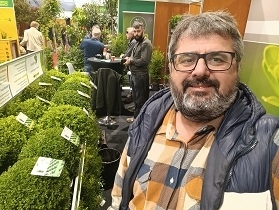
Nikolaos (Nick) Thymakis is a landscape engineer and agronomist, and an authority on horticulture and landscape design in Greece—and far beyond. As an agronomist, he focuses on water management, crop improvement, and the optimisation of soil and cultivation. Given the unusual conditions of last summer, we asked him about the importance of greenery in light of current climate trends, both in rural and densely populated areas.
Climate and Greenery
“Climate change is an ongoing phenomenon that affects both rural and urban areas. Greenery—as a factor of biodiversity in any infrastructure—serves as both a shield and a weapon in the ongoing struggle to mitigate this reality,” says Thymakis. The recent European Common Agricultural Policy (CAP) has prioritized “landscape ecology” by promoting pollinator corridors, flower meadows, the protection of old monumental trees, flood prevention through planting patterns, plant communities that naturally increase crop yields, organic farming practices, and microforests in rural areas. This gives green spaces a leading role as a factor in food security. In cities, he argues, green spaces are vital: now that more than 70% of the world’s population will live in large cities, parks, microforests, community gardens, green walls, rain gardens, pocket parks, and bee gardens are indispensable as “healing spaces, accessible to everyone.”
Do governments really want this?
The big problem, says Thymakis, is that green spaces are funded as a “tangible, priceless asset,” even though they are so much more than that. There are many initiatives, but most resources should go toward maintenance, conservation, and protection (for example, against fire). He cites Zambia, which surprised him during his recent working visit with a special “Ministry of Green Economy” focused on agriculture, landscape, energy, and climate: “a strategic way of thinking and acting that I expect from our politicians.”
Greece and the International Community
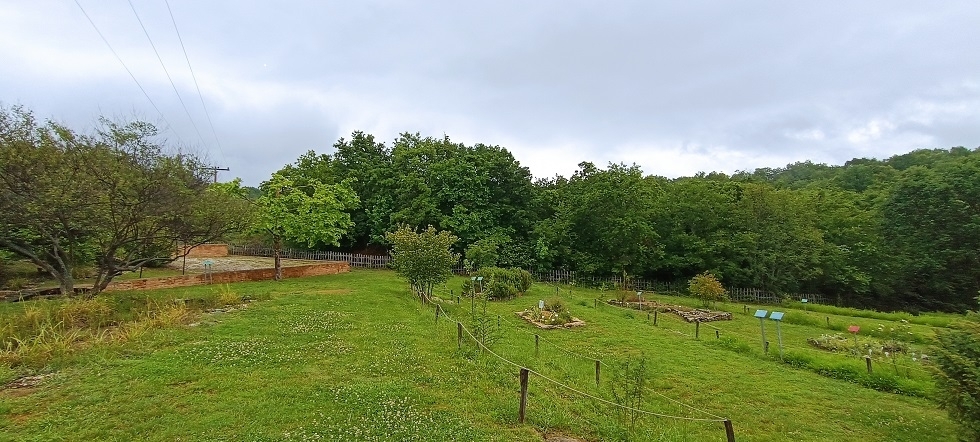
Greece has one of the richest floras in the world (top 3 in the EU), a comparative advantage. Botanical gardens can play a greater role through ex situ conservation research and applications such as pollinator patterns, the “3-30-300 rule” for cities (“the right tree in the right place”), xeriscaping, and rainwater harvesting. As curator of the Balkan Botanical Garden of Kroussia (BBGK), he knows the funding problem all too well. Globally, there is a severe shortage of labor and—worse still—of experienced professionals who combine theory and practice. More vocational education is needed, one that integrates new tools (AI, smart applications): “Without farmers, there is no food; without growers and gardeners, there is no greenery.”
Landscape Architects
Thymakis has “great respect” for the profession that combines art, science, and technology. There are two sides to this: some designers rightly fight for their original proposals until they find the right plants; however, political considerations or market availability often dictate the planting plan, at the expense of the specialist. In 5–10% of cases, the team lacks a horticultural expert, and adjustments are rightly necessary. His argument: plants today are no longer merely “ornamental plants”—they must be functional and able to adapt to the climate. AIPH, ENA, and BGCI deserve more support in this regard.
Organic Cultivation
“I’ve been a fervent advocate of organic agriculture and horticulture my whole life—feel free to call me an extremist. There’s only one way: the organic way.” He used chemicals only to combat the red palm weevil (2005–2007, via injections) until a biological control agent became available. Every landscaping project can be “designed organically from day one”; a mixed-species nursery can operate as an organic business and use an “Eco-label” to promote its practices.
Career Highlights
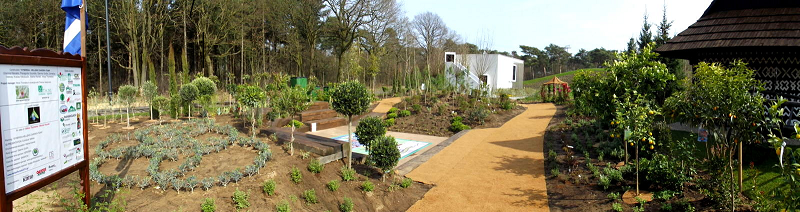
Thymakis enjoys combining culture and ecology and specializes in palm management and medicinal cannabis. He participated in 9 AIPH-recognized EXPO events (B1) and received awards for his climate-resilient “Hellenic Garden” model. One highlight: the unique thematic garden complex surrounding the Halki Theological School in Istanbul, featuring a Bible Garden, a Byzantine “Path of Virtues,” and an open-air museum—which he hopes will one day be designated a historic garden. He also mentions the Floriade 2012 (the Netherlands, with the “Synergia Hellenic Garden Team”) and the “Hellenic Olympic Garden” at the Floralies 2024 in France. “The most important thing is people’s love and respect for my work, even though I come from a country without a real horticultural tradition or a significant market.”
Historic Gardens
“Historic gardens are Noah’s Ark for the sector, and the beacon that guides us toward a better future.” Their elements—buildings, monumental trees, plantings, and intangible heritage—form an “open book” of knowledge, research, and education. He highlights the European Route of Historic Gardens and Parks as a network established to mobilize governments, stakeholders, and society. Together with botanical gardens, they are the sustainable guardians of our environmental heritage.
Thymakis draws inspiration from Demetrios Pikionis, Roberto Burle Marx, and Gertrude Jekyll, and summarizes his work in three key phrases: “For me, landscape architecture is a spiritual act—a dialogue with God about the preservation of the environment, history, and culture. An ‘aenaos’ (eternal) attempt to return to paradise.” He adds: “We do not create gardens; we recreate ecosystems. A garden must offer ‘color’ (be interesting year-round), spread ‘scent’ (herbs for medicine and self-sufficiency), and ‘sing’ (attract life and biodiversity).” And: “I create gardens inspired by books, or I create gardens as books.”
.jpg)