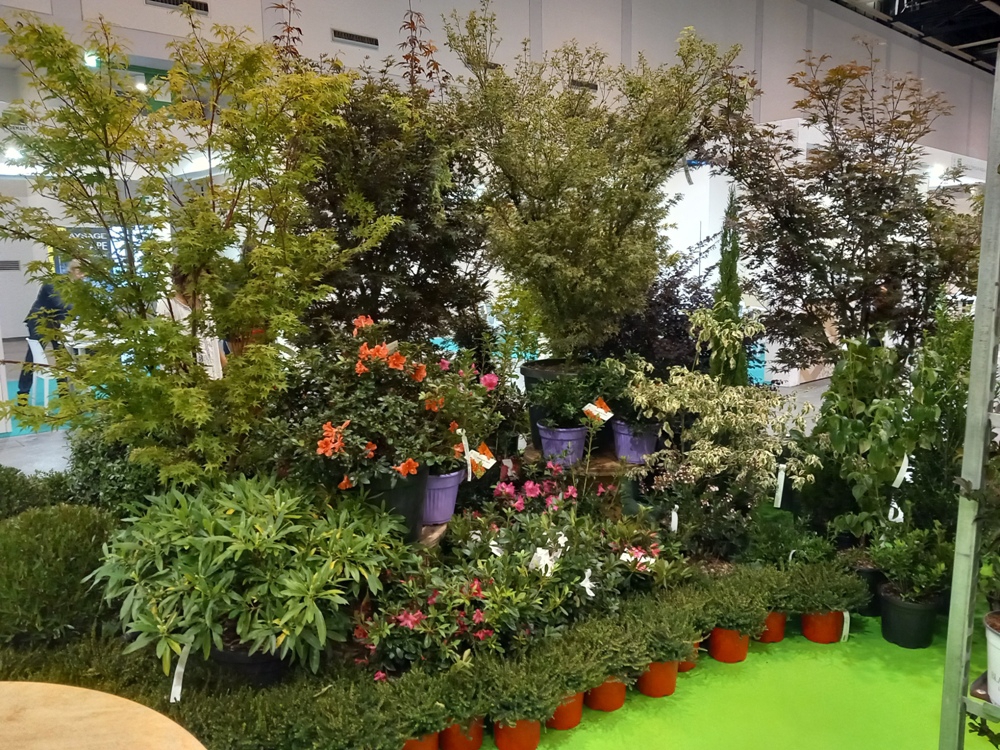
Production value of nursery stock in Italy up almost 5%
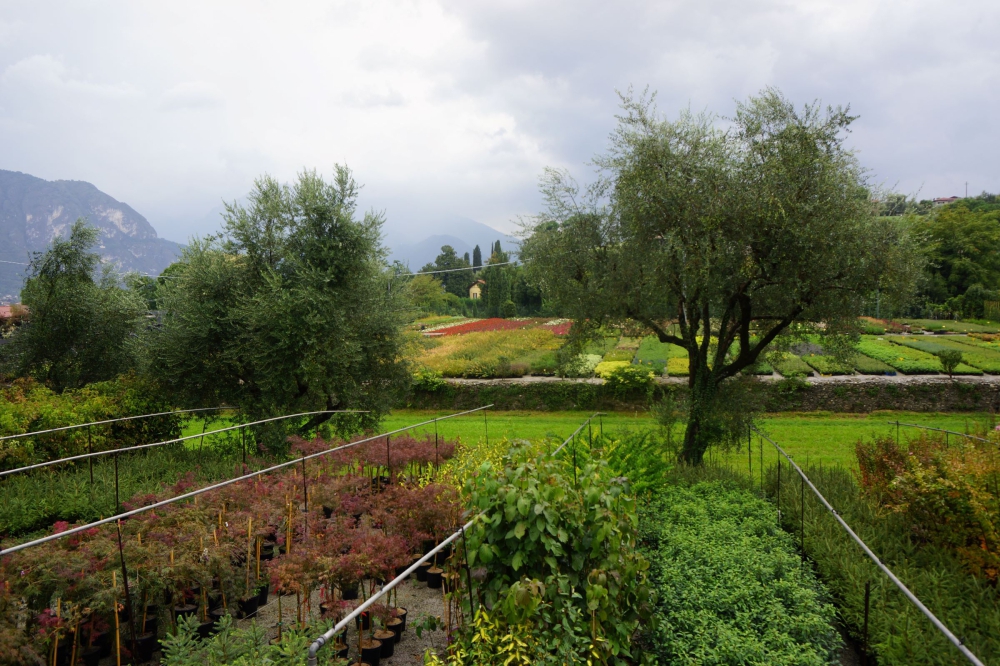
This figure includes cut flowers and potted plants; nursery stock production is worth €1.5 billion (+4.9%). Tuscany is the leading region, with turnover of €815 million, up 4% on the 2019-2020 average. However, 2022 showed a decline due to the rise in energy costs and the Ukraine/Russia war. It is likely that results for 2023 will be even worse.
The trade balance is largely positive: €1,149 million for exports and €601 million for imports (all ornamental plant products). Nursery stock products represent a significant share of exports: the main buyers are Germany, France, the UK, Spain and the Netherlands. The contraction in demand in Germany and other markets will pose a serious problem for many nurseries in Italy. The last agricultural census (2020) showed that there are about 9,000 nurseries on 31,825 ha, a sharp increase (+15.5%) in area compared to the previous census.
Italian nursery stock production areas
Italy is a country 1,200 km long and - in the northern part - 530 km wide: the influence of the mountains (Alps and Apennines) and the sea creates many microclimates and some of them are ideal for growing different types of plants. Over time, many 'production areas' have emerged across the country.
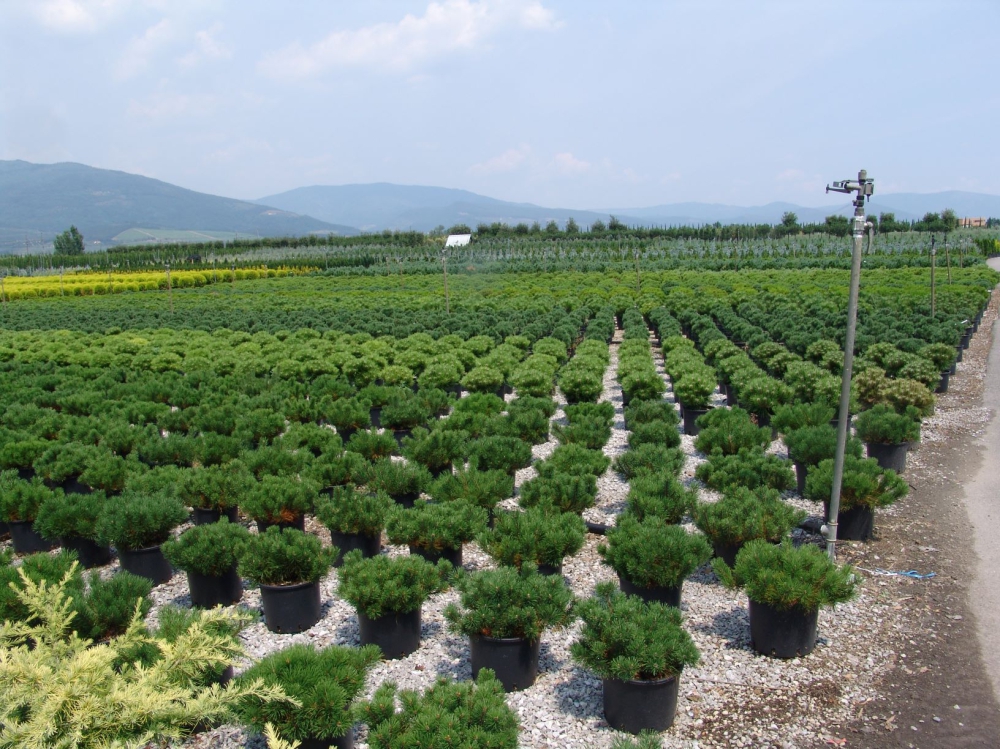
The most famous nursery area is that of Pistoia, not far from Florence in central Italy: Pistoia was considered the southernmost location where you could grow hardy plants and the northernmost for Mediterranean plants. The good quality of the soil and the availability of water were also reasons for Pistoia's success. A big change took place when containerised trees and shrubs began to be grown some 50 years ago. Now there are more than 1,500 companies in Pistoia (figures go back to 2018) on an area of 5,200 ha, about 5,500 workers (2,500 employees), for a production value of more than 300 million euros (160 million exported). On the other hand, the cost of agricultural land in Pistoia (if you can find it at all) is very high. Therefore, many of the local 'big players' are adopting new strategies: either buying nurseries, or renting farms, or signing contracts on a permanent basis with other growers in different locations in Italy and abroad, while maintaining their very high quality standard. Only the final part of the production process takes place in Pistoia and the headquarters of some of the big growers are now a kind of one-stop shop with thousands of plants of all sizes and shapes, where customers from all over the world can come to, choose their plants, place their orders and get exactly the mix they need, also thanks to very efficient logistics. Growers in Pistoia often have excellent relationships with nurseries across Europe and in the Middle East (Turkey) with fruitful exchanges of plants.
Foreign customers who need only a few selected items can buy their plants directly in the other Italian districts: if you need herbs, you can buy them in Liguria (the Italian Riviera), especially in the Albenga plain: next year, given the problems in the German market, the main customer for this type of plants, supply is likely to exceed demand.
If you need Mediterranean plants, you can find your products in the central and southern regions: Marche (Grottammare and Perugia), Lazio (Latina) and Apulia (Canosa and Monopoli). In northern Italy, you find avenue trees (Canneto sull'Oglio), acid-loving plants (Lago Maggiore) and what is left of the once great production of ornamental fruit trees (Saonara, near Padua) or Japanese maples (Lombardy and Piedmont). In Sicily, there is one of the largest nurseries in Europe (more than 600 ha), not far from Catania, just below the volcano Etna, and many ornamental citrus growers (Milazzo/Messina).
Market situation
The largest nurseries in Italy export most of their production; this is especially true for those in Pistoia, for which the Italian market is worth only a small percentage of their turnover. As in other countries, demand for trees and shrubs rose dramatically for a few years after the pandemic. This caused a shortage for some items: for some hedge plants, such as Photinia and Prunus laurocerasus, it was possible to increase production in a short time, while the real problems stem from a shortage of avenue trees, which will take several years to balance the increase in demand with the very low supply.
After the pandemic, Italy received a significant amount of money from the EU: the PNRR (Piano Nazionale di Ripresa e Resilienza - National Plan for Recovery and Resilience) includes €330 million for 'urban forests' in the 14 'Metropolitan Cities'. The programme would involve planting 6.6 million trees in total, and this was also one of the reasons for the shortage of avenue and hedge plants we talked about earlier. However, much discussion ensued - including in the national dailies - when it became known that the Environment Ministry allowed local governments to include 'planted seeds' in the total amount as well!
'Legge sul florovivaismo' (Law on floriculture)
This measure was originally intended as a law for parliament - it was almost ready before Mario Draghi's government stepped down in 2022,but will now be approved as a ministerial decree. It is very important for the Italian floriculture industry, as it will help solve a number of chronic problems facing the sector. First, there will finally be a clearer definition of what constitutes 'ornamental plant growers': sometimes the 'boundaries' between growers and traders of ornamental plants were not defined and there were also different rules between neighbouring municipalities. Another important novelty is the 'contratti di coltivazione' (contracts with growers). For example, government agencies increasingly wanted 'local' trees for their projects, but nurseries did not grow them because the market did not demand them. Now it is possible to sign contracts a few years in advance and government agencies are obliged to order the plants on time and buy them when they are ready. The law is also involved in recognising professional roles within the industry and training skilled workers.
The full text can be found (in Italian) on this website:http://documenti.camera.it/leg19/dossier/pdf/NC0060.pdf
Lack of statistics
Italy is the second producing country of sowing crops in Europe after the Netherlands and ahead of Germany and Spain. However, it was almost impossible to get statistical figures: the ISTAT report we referred to at the beginning of this article was only recently released, in December 2023. Before that, national organisations such as ISTAT, the Italian National Statistical Institute, or ISMEA, the National Institute for Services to Agricultural and Food Markets, did not publish figures on the ornamental plant trade for years: the last time ISMEA published statistics on our trade was in 2010.
The only statistics available were from Myplant and Garden (the main trade fair in Italy) and from AIPH. However, both included cut flowers and potted plants alongside nursery stock products and it was not easy to separate the values of the different industries.
Climate change is important
In both 2022 and 2023, Italy had major problems with climate change: in 2022, temperatures were very high from early May to mid-August, with almost no rainfall. This affected all agricultural products, including nursery products, with a sharp drop in production. In 2023, many adverse events occurred in different periods in different regions: two heavy floods in Emila-Romagna occurred in two waves, on 2 and 3 May and from 15 to 17 May with an estimated total damage of 10 billion euros: this region does not produce large quantities of nursery stock, but is one of the most important on the consumer side. In July and August, violent thunderstorms in several areas, especially in Lombardy, with winds of over 150 km/h caused the loss of thousands of trees, especially in the parks of Milan (5,000 trees) and Monza (over 2,000 trees), including many ancient specimens. Another flood occurred in November in Tuscany and directly affected many of the nurseries in Pistoia, with many nurseries suffering damage.
Another notable consequence of climate change - not just for Italy - is that it is becoming increasingly difficult to choose 'the right tree for the right place': we don't know what the climate will be like in 10, 20 or 30 years, so lists of plants to be used in a particular area for a particular use may be outdated. It is likely that trees will have to endure much warmer temperatures and more and more extreme events (floods, thunderstorms with strong winds) on the one hand and longer periods without water on the other.
Much Italian appreciation for GrootGoenPlus
Italian exhibitors appreciate GGP because they find professional clients from all over Europe in a relaxed atmosphere. They also find the layout with the three coloured routes very pleasant, as all exhibitors have the same chances to be visited, without any blind spots. On the other hand, Italian visitors like GGP because they find a complete range of nursery plants, with novelties, special plants and classic varieties.Many of the Italian customers also have long-standing relationships with local growers, who can supply a wide range of young plants that, grown on sandy soil, have very good roots and recover very quickly after transplanting.The 2024 edition will be the second at the new venue in the Business Centre Treeport (BCT) site on the border of the Netherlands and Belgium, which offers huge opportunities for further development. There ok will definitely be Italian companies participating.
Author: Aldo Colombo, renowned Italian journalist
.JPG)