Flemish novelties at IPM
The company Rudy Raes Flower Seeds will once again be presenting striking new products at IPM 2026.
The company Rudy Raes Flower Seeds will once again be presenting striking new products at IPM 2026:
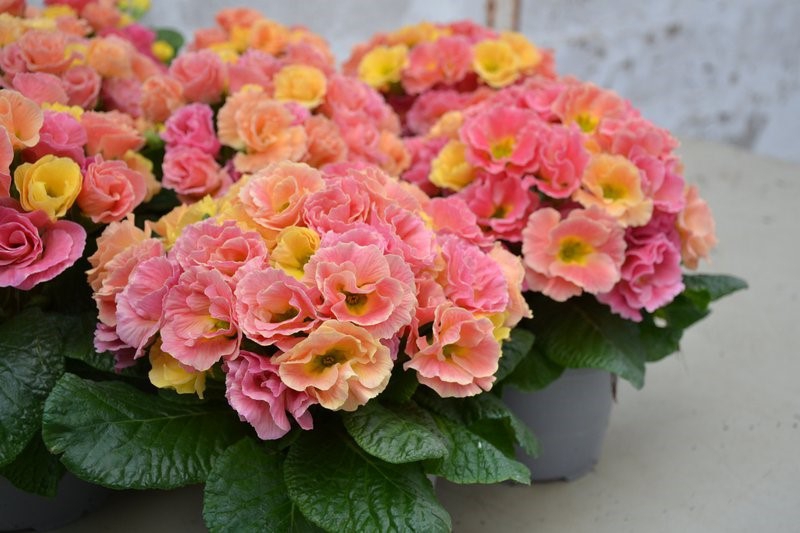
- Primula acaulis ‘Frilly Peach Melba F1
This exceptional primula novelty stands out with its two-coloured, elegantly fringed flowers in salmon and peach tones – inspired by the classic dessert “Pêche Melba”. It brings summer flair to the cold months and enriches any primula assortment. The novelty blooms from January onwards, has excellent shelf life and is ideal for larger pot sizes. The new variety has been submitted for the IPM novelty showcase.
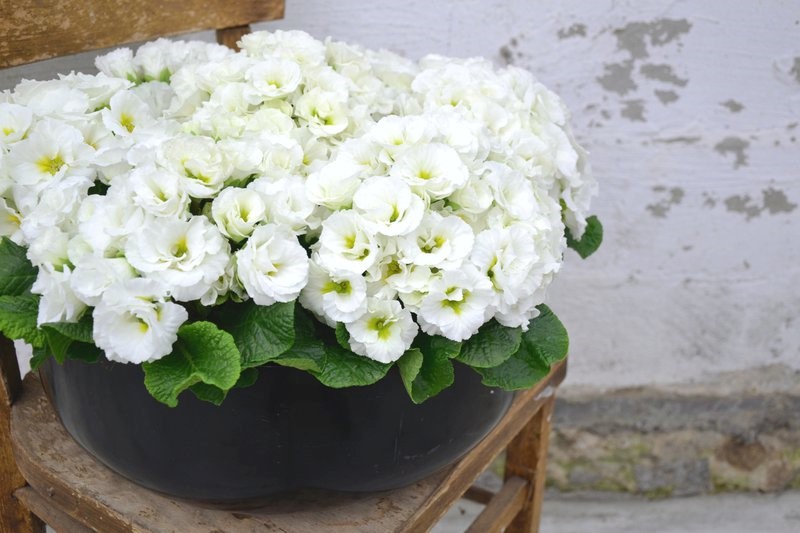
- Primula acaulis “Frilly Snowball F1”
This primrose presents itself with unique, elegantly fringed flowers and, thanks to its very early flowering and bright white colour, is perfect for the Christmas season. The new variety scores with its exceptionally long shelf life and abundance of sturdy flowers. Visually, it is reminiscent of a snowball. Thanks to its premium quality, “Frilly Snowball F1” is also ideal for larger pot sizes and adds a special touch to any interior.
About Flemish horticulture
Flanders has 619,806 hectares of agricultural land. Of this, 5,826 hectares are cultivated by predominantly family-run horticultural businesses. Most of the production takes place in open fields; the area under glass is 511 hectares. On average, a horticultural business covers 7.72 hectares.
Horticultural businesses generate an annual turnover of 492 million euro. Of this, 39 per cent comes from flowers and ornamental plants and 61 per cent from the tree nursery sector.
The green sector in Flanders has traditionally been strongly export-oriented: 86 per cent of exports go to intra-Community trade, 14 per cent to third countries – 25 per cent of which go to the United Kingdom. Belgian specialities such as azaleas, begonias and roses are particularly popular outside the EU.
Sustainability in practice
Innovation and sustainable entrepreneurship are at the heart of the work of Flemish horticultural players. With scientific support, they are developing new, robust plant varieties that are more resistant to the challenges of climate change. The use of alternative substrate mixtures significantly reduces dependence on traditional materials, which require more resources. Modern precision technologies also optimise the consumption of water, nutrients and crop protection products. Integrated crop protection is preferred over chemical applications, thus making an important contribution to ecological balance.
FLANDERSPLANTS.COM
On the online platform www.flandersplants.com, Flanders' IPM participation is prominently featured in the trade fair calendar. Interested visitors can find out about the Flemish exhibitors and view their company profiles there before the trade fair. In addition, the website offers extensive information about Belgian horticulture, including a supplier guide, product information and company presentations.