Grower’s Pride: Carpinus betulus
Carpinus betulus – commonly known as European hornbeam – has been a stable cornerstone of the European forest and hedge plant assortment for decades. While trends shift and new cultivars enter the market, this species continues to prove its value through reliability, adaptability and strong growth. For Roelands Boomkwekerijen, Carpinus betulus is not a side product, but a structural element within the core assortment.
Cultivation Advantages
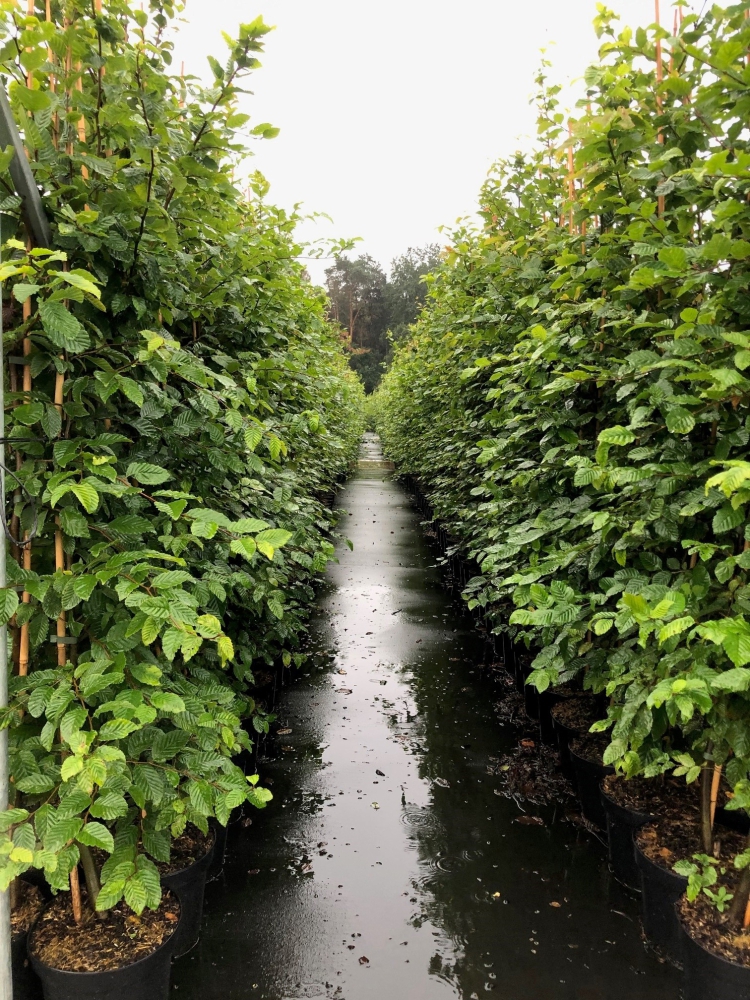
Carpinus betulus is valued for its uniform growth and well-developed root system. In open field production, the tree forms a finely branched root structure that performs well during transplanting. This makes it suitable for bare-root supply, root-balled trees or container production, depending on the target market.
During the growing phase, Carpinus responds strongly to formative pruning. It branches easily and can be guided efficiently towards straight stems and a balanced crown structure. For growers, this translates into fewer corrective interventions in later years and a predictable production process towards project sizes.
A key advantage is its broad soil adaptability. Carpinus performs well on lighter sandy soils as well as heavier clay soils, provided drainage is adequate. The species is fully winter hardy and relatively tolerant of temporary wet conditions. This reduces cultivation risk in seasons with unpredictable weather patterns.
From a logistical perspective, Carpinus also offers practical benefits. Its tough wood structure and flexible branches make it less susceptible to damage during lifting, transport and planting compared to more brittle species. This results in lower losses and consistent quality upon delivery.
Application
Carpinus betulus is widely used as an avenue tree, park tree and hedge plant. In urban environments, it is appreciated for its dense crown structure and strong pruning tolerance. The species is highly suitable for pleached forms, shaped trees and block hedging systems.
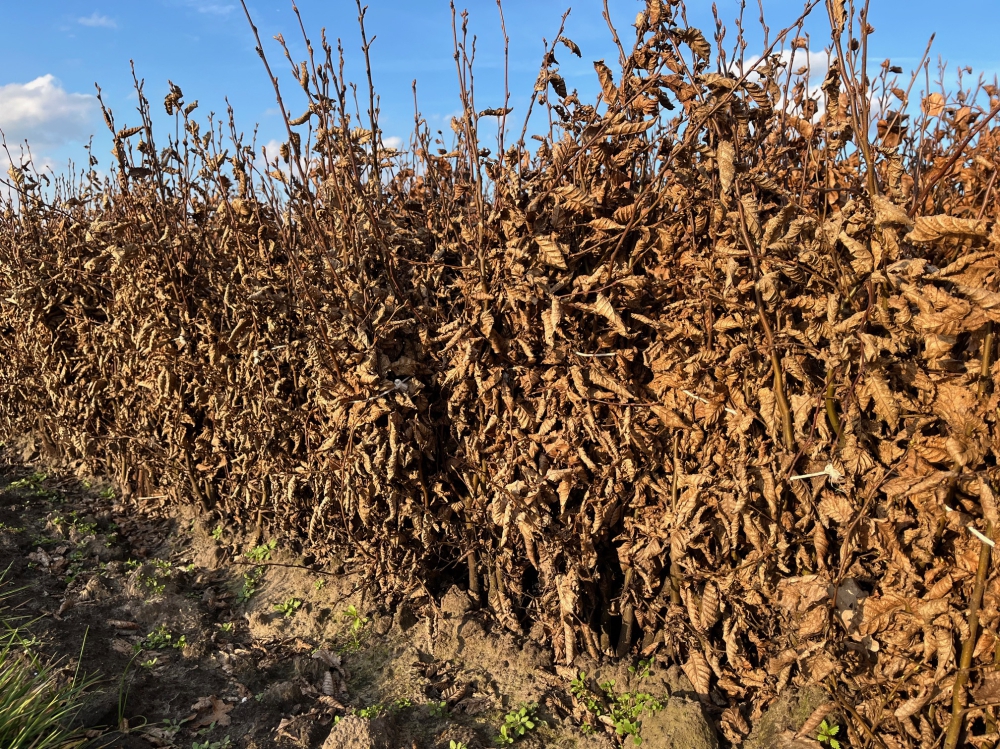
In landscape projects, Carpinus is valued for its natural appearance. Fresh green foliage in spring and a warm yellow-brown autumn colour provide clear seasonal expression. Notably, in hedge applications the withered leaves often remain partially attached during winter, maintaining privacy and structural definition throughout the colder months.
Due to its wind resistance and strong anchorage, Carpinus is frequently planted in open or exposed locations. Municipalities often select it as a robust alternative to more sensitive avenue species.
Consumer Value
For end users – ranging from private garden owners to public authorities – Carpinus represents reliability. It is a plant that adapts well to varying site conditions, tolerates pruning and performs consistently over time.
Maintenance costs remain manageable because the species responds well to pruning and has limited specific disease susceptibility. This makes it particularly relevant in times when green space management budgets are under pressure.
Furthermore, Carpinus fits well within climate-adaptive planting concepts. It can cope with periods of drought as well as temporary waterlogging. This flexibility enhances its long-term viability in both urban and rural planting schemes.
Export Opportunities
Carpinus betulus holds a strong position in North-Western Europe. Demand for uniform avenue trees and hedge material remains stable in countries such as Germany, Belgium and the United Kingdom. Thanks to its winter hardiness, the species is also suitable for colder regions in Central and Eastern Europe.
For exporting nurseries, the recognisable market position of Carpinus is a clear advantage. The species is well established in specifications and public tenders, which contributes to relatively stable pricing compared to more trend-driven selections.
Why choose Carpinus betulus?
Carpinus betulus combines cultivation security with market stability. The species can be produced efficiently, offers broad application possibilities and benefits from consistent demand both domestically and internationally. For growers, this means reduced risk, predictable turnover and a product that fits into virtually every green infrastructure strategy.
For Roelands Boomkwekerijen, Carpinus betulus stands for craftsmanship in classic yet future-proof species – reliable in production and solid in the market.
.jpg)