Dutch urban tree tenders are becoming more demanding
Urban tree tenders in the Netherlands are becoming more demanding and performance-oriented. While size and price remain relevant, municipalities increasingly focus on long-term performance under urban stress conditions. For nursery growers supplying the Dutch market, this means that demonstrable quality and documentation are gaining importance.
Research conducted by Wageningen University & Research indicates that many municipal tree managers are actively searching for better-supported choices of climate-resilient species. Trees are expected to cope with prolonged drought, intense rainfall events and restricted rooting space in heavily paved environments. This search for certainty is reflected in tender documents that explicitly refer to drought tolerance, heat resilience and root development.
In cities such as Amsterdam and Rotterdam, urban redevelopment projects increasingly address heat island effects. Trees are selected not only for aesthetic reasons but also for their contribution to cooling and water buffering. As a result, standard species are no longer automatically accepted. Municipalities often request a clear justification of why a particular species is suitable for a specific location.
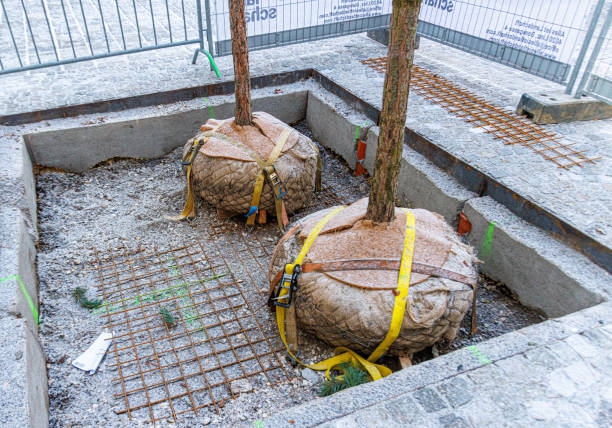
At the same time, Dutch municipalities face significant spatial pressure. Housing construction, mobility infrastructure and urban greening compete for limited space. When a city decides to invest in tree planting, it seeks to minimise failure risks. This explains why warranty periods in some tenders have been extended to two years or more. Responsibility for establishment success is partly shifted towards the supplier. For growers, this increases the importance of a well-developed root system and consistent grading.
Documentation is also playing a larger role. Tender documents more frequently request information on origin, cultivation practices or sustainability efforts. Full certification is not always mandatory, but transparency and traceability are increasingly valued during evaluation. Growers who can clearly explain their production process and quality control procedures strengthen their position in competitive bids.
In addition, municipalities often work with preferred lists of climate-resilient species or require justification when alternatives are proposed. This means that nursery assortments should be reviewed critically. Species that demonstrably perform under urban stress conditions gain a competitive advantage.
For Dutch nursery businesses, the practical question is no longer whether this shift is taking place, but how to respond. Is the current assortment aligned with urban climate challenges? Are internal quality controls robust enough to support extended warranty obligations? Can origin and cultivation methods be clearly communicated when required?
The procurement landscape is evolving gradually, but the direction is clear. Municipalities seek lower failure rates, greater certainty and better-justified choices. For well-prepared growers, stricter requirements do not only represent higher standards, but also an opportunity to differentiate themselves in a market that is steadily becoming more professional and performance-driven.