- HOME >
- NEWS >
- Cultivation 22-04-2026
Azaleas, camellias and a touch of tea: how Italy conquered a niche market
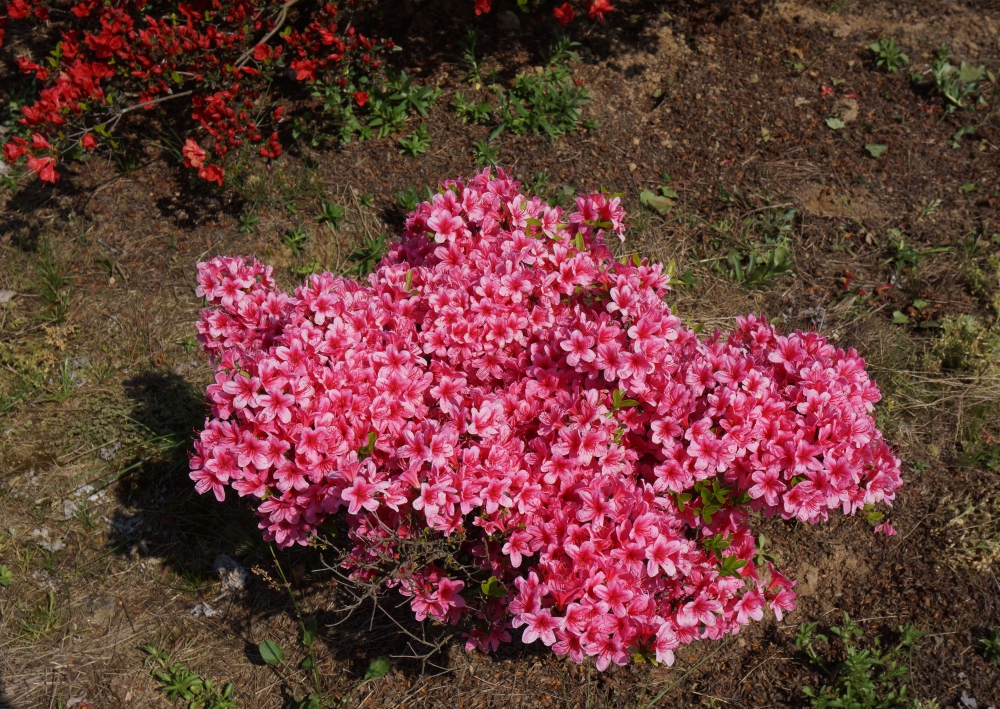
The professional cultivation of acid-loving plants in Italy has a long history. As early as the second half of the 19th century, on the Piedmont side of Lake Maggiore, some gardeners who worked in the parks of the majestic villas in the area, thanks to their experience and realizing that the demand for these plants was very high, helped by their families, set up their own businesses, growing azaleas, rhododendrons and camellias. These plants were the most suitable for the area, given the acidic nature of the local soil. Very old specimens can still be found in parks and gardens in the area, which sometimes are now used as mother plants to reintroduce ‘ancient’ varieties to the market.
For many years, family businesses supplied the local market. Then, in the 1970s, a first turning point arrived: the pioneering phase of ‘industrial’ floriculture in Italy was also developed in these areas. Thanks to the high demand for these plants, many traditional farmers switched to ornamental horticulture, with open field cultivation, made easy by the acidic soils of the area and low thermal requirements (thanks to the proximity of the lake), which enabled growing plants even in relatively low-cost structures such as shade houses and tunnels.
Many small growers joined together to form large marketing cooperatives. The range of plants has also expanded over the years: in addition to the most used varieties of azaleas, rhododendrons and both spring-flowering and autumn-flowering camellias, crops as Japanese maples, Pieris, Kalmia and other ‘minor’ acidophilic plants have also been added over time. Other important products include special varieties of azalea (such as deciduous varieties, from the ‘Mollis’ to ‘Knap Hill’ groups), Rhododendron (R. yakushimanum,R. catawbiense, etc.) and large specimens. Also, topiary forms, such as spheres, hemispheres, standard, cubes and – for camellias – multi-stemmed varieties are top sellers.
In the same period, professional cultivation also began in other Italian regions, such as Tuscany (the Lucca area was also historic for camellias) and Lazio, especially in the Latina district.
Another important step was the transition from open field cultivation to container cultivation: on one side this allowed Italian growers to export their varieties to several Northern European countries their varieties, but also involved more sophisticated and expensive infrastructures, namely bigger tunnels and greenhouses. Italian nurseries preferred not to compete directly with Belgium and other countries on small azaleas, focusing instead on larger products and excellent quality and plants that are not usually grown in northern Europe: this is why Camelia became the main product on the Italian market.
The growth of the nurseries was hampered by the major economic crisis that began in 2006: many small companies closed, some absorbed by their colleagues, but production did not fall significantly; even nowadays Italian companies are able to produce and export substantial quantities of acid loving plants.
One of the growers on Lake Maggiore, a few years ago, introduced the cultivation of Camellia sinensis, the tea plant. Besides selling the plants, which was also a commercial success, he has also started producing a ‘Made in Italy’ tea that is highly appreciated on the elite market and is distributed in Italy by a major specialised platform, both through shops and online sales.
Author: Aldo Colombo
.jpeg)