Garden market in Germany comparatively stable
Given the generally gloomy economic mood in Germany, horticulture is still in relatively good shape. This was also made clear at the Media Day Garden event organised by the German Horticultural Industry Association (IVG) in Cologne in February 2026. The organisers were encouraging about the future of the green sector, despite all the challenges: plants and gardening continue to offer opportunities for those who are rethinking their approach and adapting to change.
Better marketing needed
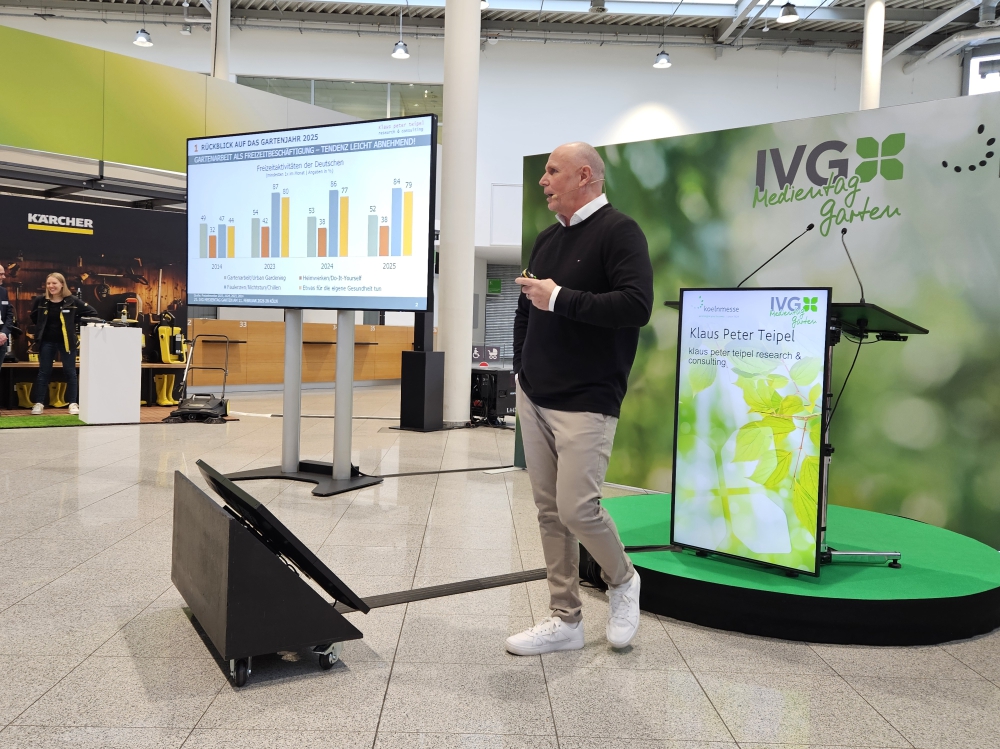
Klaus Peter Teipel, market researcher in the DIY and gardening sector, presented a review of 2025 in Cologne. He pointed out that the green sector also had to contend with slight losses in sales. ‘Compared to other sectors, however, the garden market must be highlighted as significantly less susceptible to economic fluctuations,’ said the expert. Sales in the industry amounted to £19.7 billion in 2025, down 0.6 per cent on the previous year. While sales of live plants fell by as much as 2 per cent, sales of hardware rose by 0.7 per cent and sales of biological and chemical supplies rose by as much as 1.2 per cent.
Traditional distribution channels continued to lose sales in 2025 to non-industry, discount-oriented suppliers and online retailers. Nevertheless, specialist retailers still have opportunities – even with Gen Z. However, it is no longer enough to simply display plants on the shop floor.
The issue of sustainability is very important to younger generations, and working with plants is a countertrend to increasing digitalisation. At the same time, there are also interesting digital developments in gardening, which is naturally analogue, such as the increasing use of AI in plant care. In difficult times, the gardening market also benefits from the fact that it is very important to consumers. They are therefore willing to spend money on it. However, according to Teipel, there is often a lack of motivation and inspiration. This presents opportunities for specialist retailers to boost sales.
Trends offer opportunities
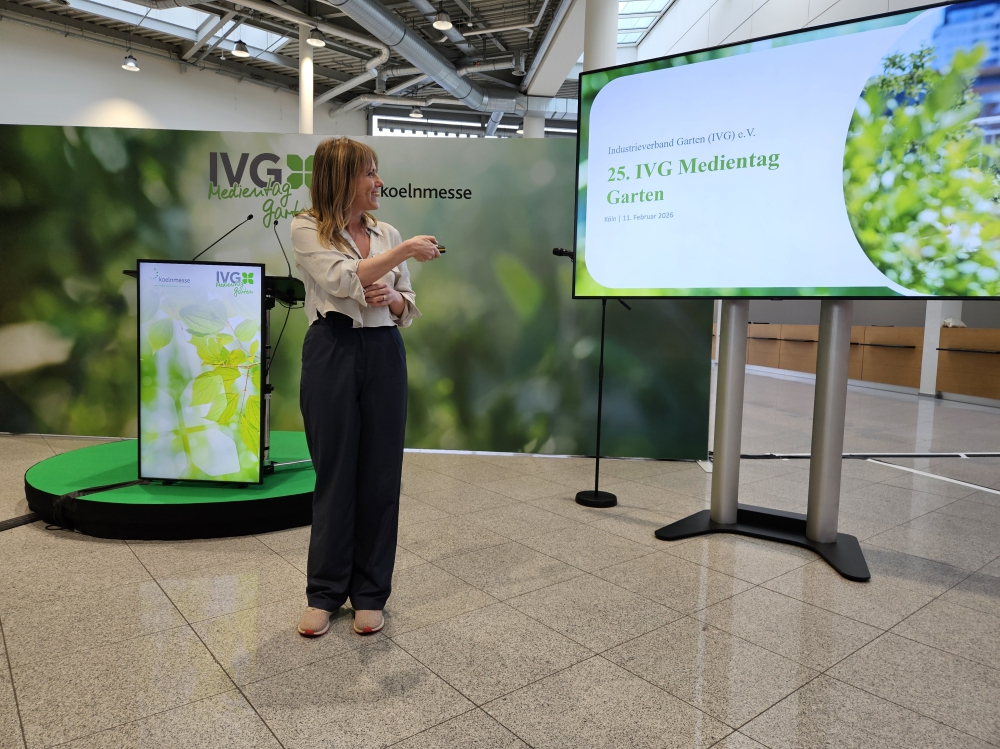
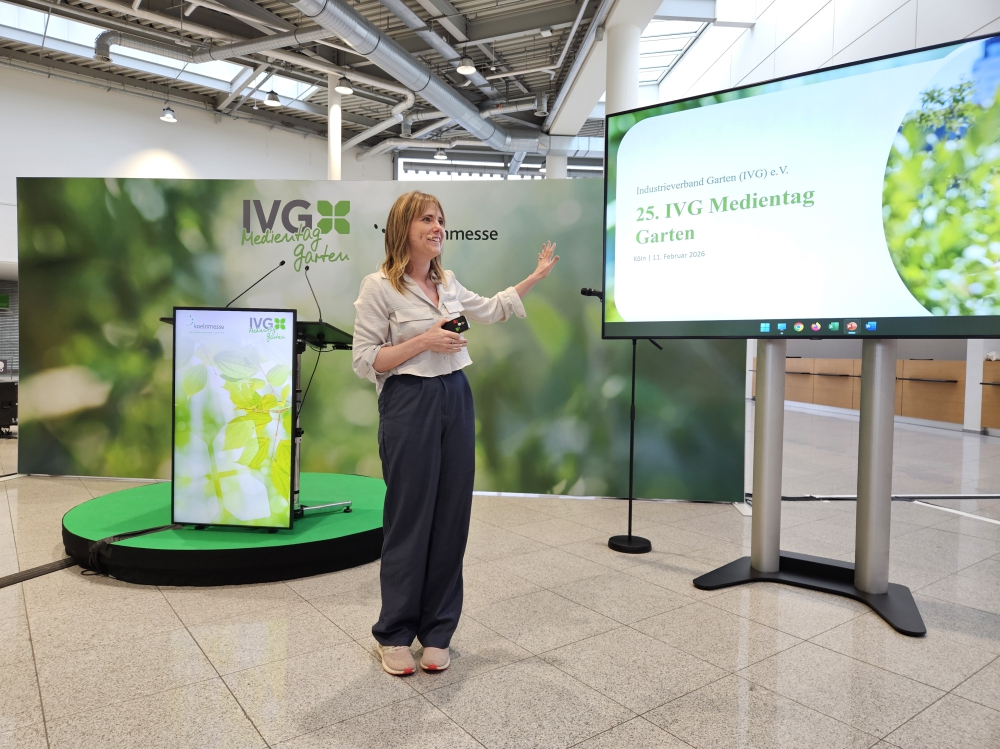
‘We live in a rather strange world’ – this statement by futurologist Theresa Schleicher during the IVG Media Day sums up the attitude to life of many people: The world is becoming more confusing and unpredictable in the face of global tensions. The savings rate in Germany is relatively high: according to surveys, a quarter of Germans want to continue saving in 2026. However, the garden should not be underestimated as a place of retreat in turbulent times. And with an eye on values such as security, quality and belonging, which are also important to younger people, the plant trade can develop new approaches and thus appeal to younger people.
According to the futurologist, trends identified in surveys include:
1. Robotics: Function is more important than form. Respondents placed particular emphasis on durability, low resource consumption, products with a complete range and the ability to control devices while on the move.
2. Solution offerings: Many customers are looking for holistic solutions rather than just products, e.g. plants that tolerate dryness and heat, products for self-sufficiency or ideas for saving water when gardening.
3. E-commerce and convenience: Here, specialist retailers have the opportunity to offer curated collections or present design worlds based on urban balconies and gardens, among other things.
4. Gen Z trends: Lifestyle aspects offer ideas for the plant market. These include health trends and the area of ‘global cultures’, as 23 per cent of respondents would like to discover new flavours – not necessarily from other continents, but also from Europe.
Text and photos: Anke Bührmann