Heat, Pests and the End of Hungary’s Thuja Era
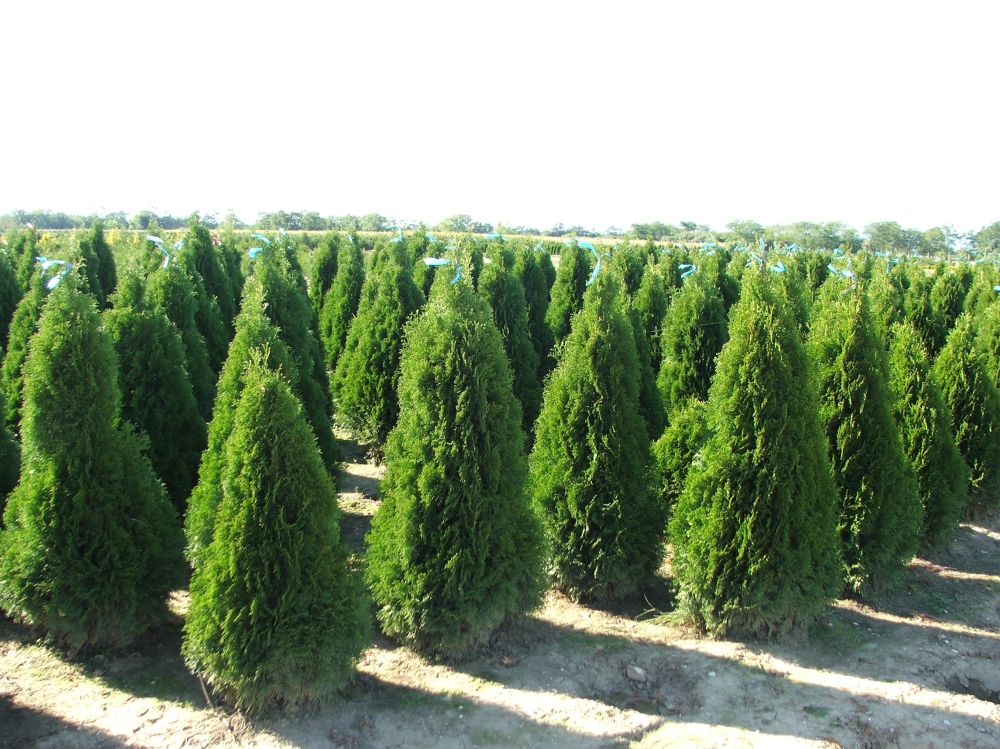
Emerald Green arborvitae (Thuja occidentalis ‘Smaragd’) defined Hungarian suburban gardening. Dense, narrow, evergreen and affordable conifer became the standard choice for privacy hedges around family homes and residential developments. At its peak, climate change has formed thuja production, a major part of nursery business model for many Hungarian ornamental nurseries. For today, however the past dominance, Emerald Green arborvitae has almost disappeared from the Hungarian gardens.
Mild winters, prolonged drought, extreme summer heat and increasing pest pressure have fundamentally changed both consumer confidence and nursery production strategies across Hungary. Many growers now describe the situation as one of the most significant transformations in the Hungarian ornamental plant sector of the past decade.
From “bread-and-butter plant” to risky business
Emerald Green arborvitae (Thuja occidentalis ‘Smaragd’) became exceptionally popular in Hungary during the 1990s and 2000s as suburban expansion created enormous demand for reliable evergreen hedge-plants. It was easy to market, visually uniform and relatively simple to produce at large scale. For many small and medium-sized nurseries Emerald Green arborvitae became the economic foundation. Large quantities were sold to the domestic market and exported to abroad mostly to the neighbouring countries, even to Italy and Russia. Some nurseries specialized almost exclusively in ‘Smaragd’ production.
This heavy dependence later became a major vulnerability.
Heat stress weakens traditional hedges
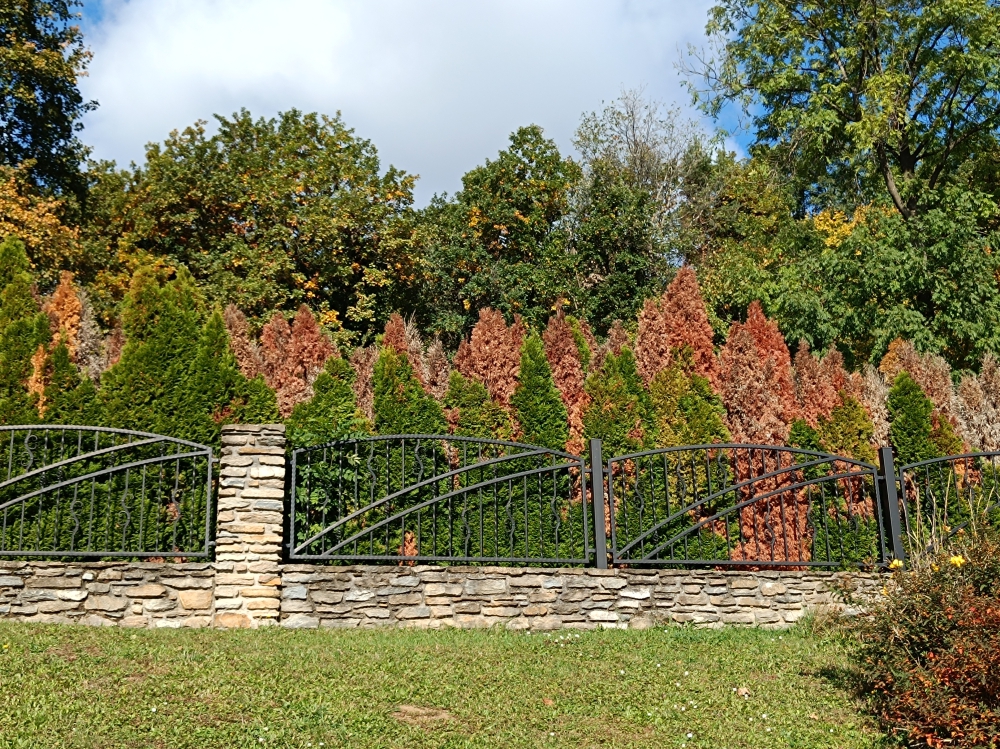
Hungary has experienced increasingly severe drought periods and heat waves in recent years. Long summer dry spells, mild winters and extreme temperatures have placed heavy stress on shallow-rooted conifers such as thuja. In many regions, particularly on sandy soils and in urban environments, irrigation and proper nutrition is no longer sufficient.
Climate stress has also weakened plant resilience, creating ideal conditions for pests such as the cypress jewel beetle (Lamprodila festiva) have become increasingly serious problems in drought-stressed hedges and nursery stock. Browning foliage, branch dieback and partial plant losses have become common in both private gardens and commercial landscapes.
From protected species to harmful pest
The spread of the cypress jewel beetle accelerated the decline of thuja popularity in Hungary. The pest attacks weakened plants, often causing rapid dieback that homeowners initially mistake for drought damage. In addition to thuja, the cypress jewel beetle has also been reported to affect other ornamental conifers and scale-leaved evergreens, including species and hybrids within xCupressocyparis, Chamaecyparis, and even some Juniperus taxa. It suggests that the damage is not limited to a single plant group but may extend across a wider segment of ornamental conifer production.
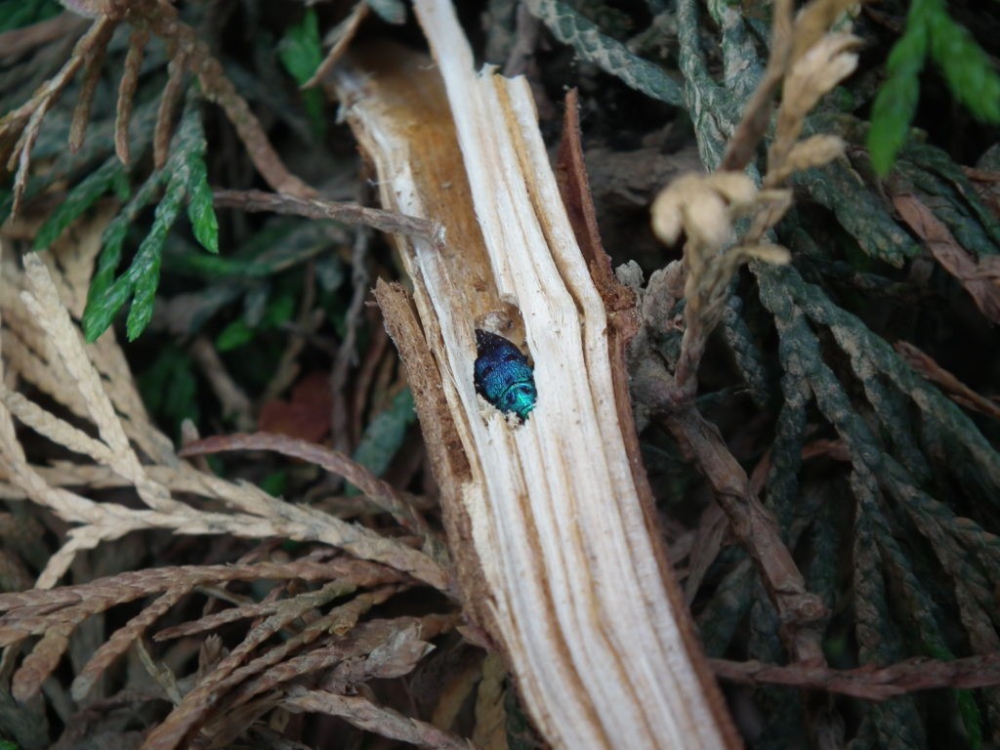
The issue became particularly controversial because the cypress jewel beetle, a very striking, shiny blue beetle, previously had highly protected status in Hungary. A single specimen carried a conservation value of 50,000 HUF (c. € 140). As the species spread, the beetle population exploded and became a pest, causing economic damage to evergreens (especially thujas), leading to its removal from the protected species list in 2016, and became a widely “persecuted enemy”.
Difficult to control
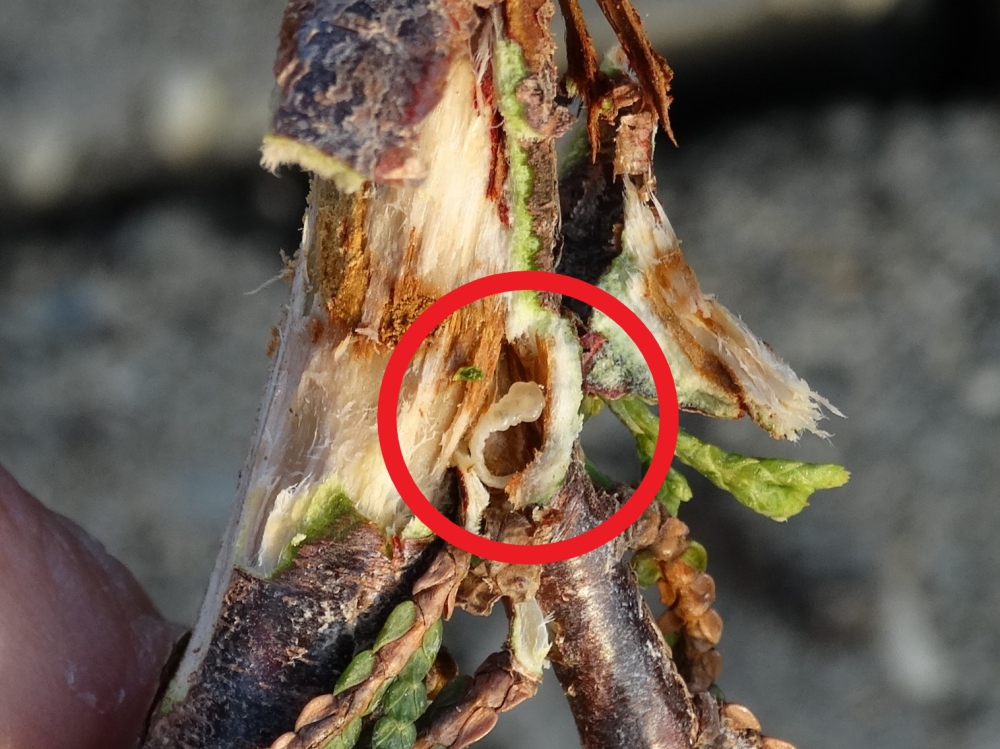
Control measures have also proved difficult. Larvae develop hidden beneath the bark and inside plant tissues, where contact insecticides have limited effect. By the time visible symptoms appear, infestations are often already advanced.
Since the larvae cannot be reached with chemical control, the adult beetles (imago stage) would need to be targeted. However, achieving effective control would require continuous chemical treatment of the stands for about two months (in Hungary the beetle swarms from mid-May to early July) which is not practically feasible. Dense mature hedges are also difficult to spray effectively, while restrictions on plant protection products continue to increase.
For nurseries, the combination of climate stress, hidden infestations and limited control options has created severe production uncertainty.
Nurseries have run into difficulties
It became clear, that monoculture hedges, such as those based solely on Emerald Green arborvitae, are particularly vulnerable to both climate stress and pest pressure, making them a high-risk planting strategy. Many homeowners who once planted entire property border hedges with thuja are now actively searching for alternatives. As a result, many growers are gradually reducing their dependence on thuja production altogether.
For nurseries heavily dependent on Emerald Green arborvitae production, the economic consequences have been severe. Some family-run businesses were forced to significantly reduce production, while others reportedly went out of business completely after consecutive years of losses linked to pest damage and declining sales.
The situation became a striking example of how climate-related stress and emerging pests can rapidly destabilize long-established ornamental nursery sectors.
Searching for resilient alternatives
Hungarian nurseries are now experimenting with more resilient hedge plants and drought-tolerant alternatives. Some growers report better performance from more robust western red cedar (Thuja plicata) cultivars with faster regenerative capacity (eg. ‘Atrovirens’, ‘Excelsa’), for those who insist on planting thujas.
Species such as Photinia, cherry laurel, privet, Elaeagnus pungens and Leyland cypress (although the latter can also be attacked by the cypress jewel beetle) are gaining popularity, alongside more diverse mixed-species, evergreen and deciduous flowering hedges, considered more resilient and environmentally sustainable.
The decline of Emerald Green arborvitae production in Hungary may ultimately serve as an early warning for ornamental nursery sector across Europe. What was once considered a reliable mass-market plant has become increasingly difficult and risky to produce under changing climatic conditions.
Author: Edina Pap, Kertészet és Szőlészet, Hungary