- HOME >
- NEWS >
- Cultivation 28-05-2026
Climate Trees and Urban Street Planting: Importance of Locally and Regionally Adapted Climate-resilient Selections in Europe
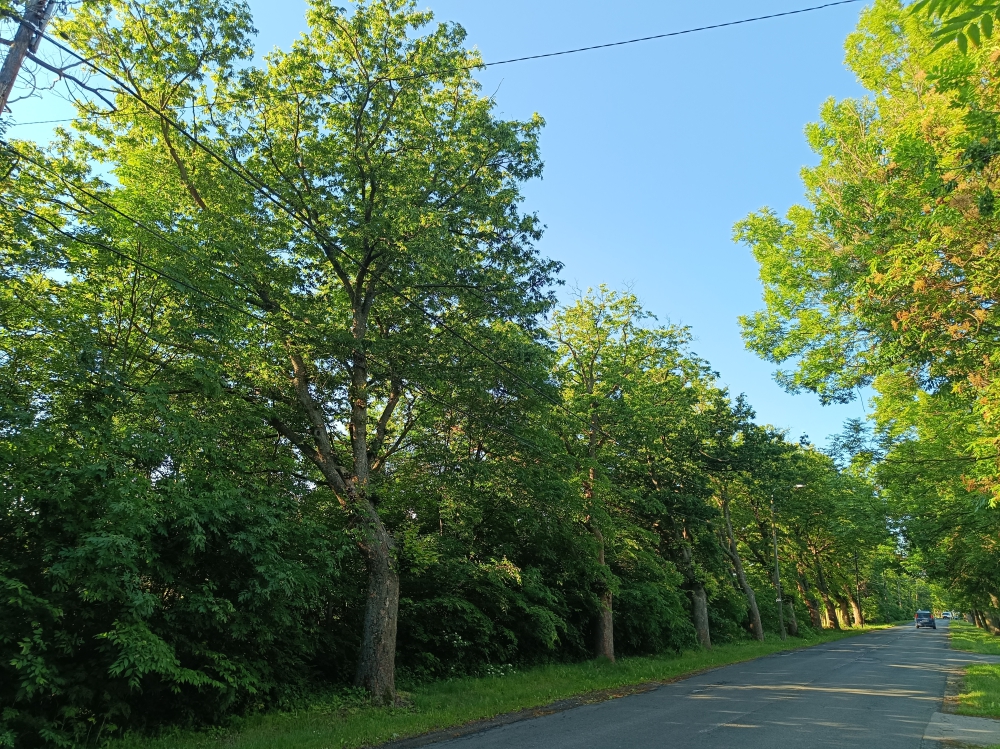
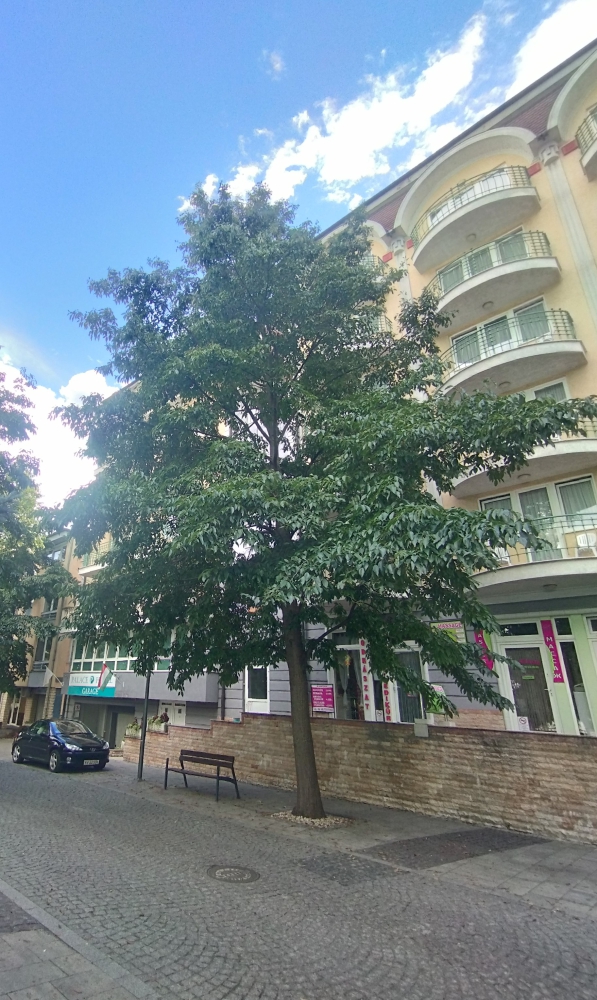
Urban trees are essential elements of modern cities, providing shade, cooling, air purification, noise reduction and water management. Street trees are no longer seen as purely decorative elements, but as functional green infrastructure. In the context of accelerating climate change, their overall public health role has become even more critical, particularly in densely built environments where heat stress and drought conditions are intensifying year after year.
At the same time, urban conditions are extremely demanding for street trees mostly. Limited rooting space, compacted soils, reflected heat from buildings and roads, air pollution and irregular water supply all create a highly stressful environment. Climate change further amplifies these pressures, making tree selection a central question for urban planning and nursery production alike in Hungary and across Europe as well.
From survival to performance – importance of functional leaf duration
Tree canopy plays a decisive role in regulating microclimates in cities, especially during heatwaves. Almost all ecosystem services provided by trees – from shading and cooling to air quality improvement – are directly linked to the health and longevity of their foliage. This makes canopy performance one of the most important criteria in urban forestry today, which has become a leading area of research in Hungary in recent years. It is not enough for trees to survive in cities; they must remain functionally active throughout the growing season.
A key emerging concept is functional leaf duration – the period during which a tree maintains healthy, photosynthetically active foliage without significant stress-related leaf losses. In practical terms, this can vary widely between species. For example honey locust (Gleditsia triacanthos) may maintain functional foliage for around 18 weeks, while flowering ash (Fraxinus ornus) can sustain a healthy canopy for more than 30 weeks under similar conditions. This difference of several weeks translates into a substantial variation in ecosystem service delivery in urban environments.
Native and well-established non-native species and sorts
Across Hungary and much of Central Europe, several deciduous tree species are already widely used in urban planting schemes due to their adaptability:
- Acer campestre – one of the most reliable native urban trees, showing strong tolerance to drought, pollution and compacted soils.
- Acer platanoides – traditionally widely used, but now more cautiously recommended due to heat and drought stress sensitivity. Hungarian-bred cultivar ‘Cinóber’ has an extraordinary brilliant fiery red autumn foliage, and tolerates climatic extremes very well.
- Alnus × spaethii – a fast-growing, urban-tolerant hybrid alder that performs well on difficult, wet or compacted sites. It can be allergenic due to its heavy early-spring pollen production.
- Carpinus betulus – increasingly used in structured urban plantings for its adaptability and strong response to pruning.
- Fraxinus ornus – increasingly valued for its excellent drought resistance and extended functional leaf duration, making it a strong candidate for climate-adaptive planting. Especially a Hungarian-selected Fraxinus ornus ‘Mecsek’, as the first genetically globe-shaped cultivar. Other promising Hungarian selections include: ‘Huba’ and ‘Tas’.
- Gleditsia triacanthos – appreciated for its urban tolerance and light canopy structure, even if its leaf duration is comparatively shorter.
- Koelreuteria paniculata – increasingly considered for warm urban microclimates
- Platanus × hispanica – although it remains widely planted due to its strong urban tolerance, it is increasingly affected by serious pests and diseases such as plane anthracnose and the plane lace bug (Corythucha ciliata). In combination with heat stress and drought, these pressures often lead to premature leaf damage and reduced canopy quality, making long-term maintenance more challenging.
- Pyrus calleryana ’Chanticleer’ – a highly urban- and climate-tolerant tree, well adapted to heat, drought, pollution and compacted soils.
- Styphnolobium japonicum (previously Sophora japonica) – highly drought-resistant and well adapted to urban environments.
- Tilia tomentosa – widely planted in European cities due to its heat and drought tolerance and its ability to provide dense, long-lasting shade. Tilia tomentosa ‘Szeleste’ is a well-known Hungarian selection of silver linden with good urban tolerance and xTilia ‘Szent István’.
Climate-adaptive 'future tree' candidates
In Hungarian and Central European urban tree research, several additional deciduous tree species are being studied or recommended for street planting suitability:
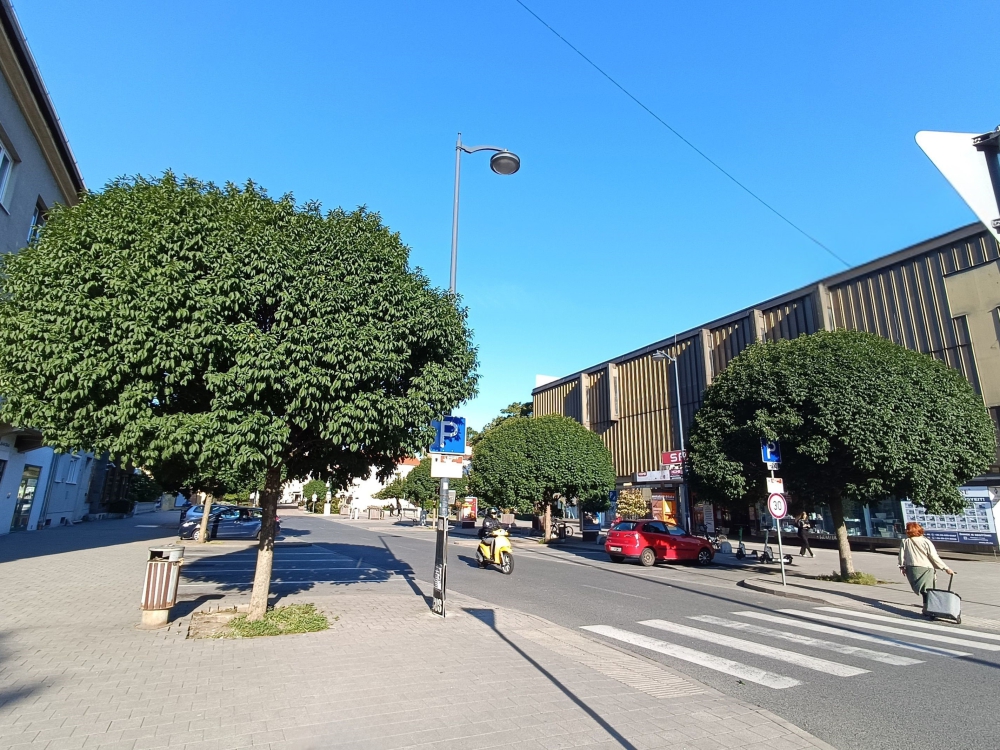
- Celtis occidentalis – one of the most promising climate trees due to excellent heat and urban stress tolerance. (It can spread spontaneously in some regions, but it is not considered an aggressive invasive species. Overall, it is regarded as a safe choice in terms of climate-adaptive tree planting.). Hungarian-bred Celtis occidentalis ‘Globosa’ has a round canopy shape making more suitable for narrow streets and in old cities under overhead power lines.
- Quercus robur – long-lived and capable of forming large canopies, but more sensitive in early establishment stages under urban stress
- Quercus pubescens – better drought tolerance, increasingly considered suitable for warmer, drier urban sites
- Sorbus aria / S. torminalis – good drought tolerance, suitable for smaller urban spaces. Hungary has a broad range of climate-resilient Sorbus cutivars selected from the harsh Hungarian nature, eg. Sornbus rotundifolia ‘Bükkszépe’ and Sorbus decipientiformis 'Vállus'.
- Zelkova serrata – often studied as an elm alternative with strong urban resilience.
- Ginkgo biloba – extremely tolerant of urban stress, though slow-growing. Hungarian-bred cultivars for street tree planting ‘Globus’, ‘Hungaria’, ’Magyar’, ‘Katlan’, ‘Pillar’, 'Pyramis’.
- Ostrya carpinifolia – Mediterranean species with good drought tolerance potential
These species are increasingly evaluated in Hungarian urban forestry research as potential “climate trees”, focusing not only on survival but on drought tolerance, heat resilience and long-term canopy performance under extreme urban conditions.
Hungarian selections may form an important part of Central European urban forestry practice. They demonstrate how local selection work can contribute to climate-resilient planting strategies, particularly in environments where increasing temperature extremes and water scarcity are reshaping traditional species choices.
A necessary shift for European nurseries
For European nurseries, climate change is driving a major shift in priorities. Traditional assortments based on aesthetics, fast growth and established planting habits are no longer sufficient in changing urban conditions.
Future nursery production needs to focus increasingly on drought and heat tolerance, long functional leaf duration, resilience to temperature extremes, adaptability to poor urban soils, pest and disease resistance, and long-term canopy stability.
This means nursery portfolios can no longer rely on a narrow group of traditional species. Instead, they must include a broader mix of climate-adapted trees, combining underused native species with carefully selected non-native taxa.
Locally and regionally adapted climate-resilient selections will play an increasingly important role in the future assortment of European nurseries, as they are often better suited to the challenges of Central European urban environments than many traditionally used species and cultivars.
For nurseries, this transition is both a challenge and an opportunity, as those adapting to climate-focused selection will play a key role in future urban landscapes.
Text and photos: Edina Pap, Kertészet és Szőlészet, Hungary